Your Body Isn't Broken. It's Waiting.
Struggling with fatigue, burnout, PCOD, perimenopause symptoms, or emotional exhaustion? Discover how women's travel, wellness retreats, nature experiences, and supportive communities can help reduce stress, restore mental wellbeing, and support overall health.
One of our Flappers messaged me a few months ago. She had been on our list for a while, had looked at a couple of trips, and then one day just wrote: "Zinal, I really want to do this. But my body has been acting up. Maybe next year."
I sat with that message for a bit before I replied.
Not because I didn't have an answer, but because I've heard this so many times over the past ten years of running The Flapper Life. The back pain. The fatigue. The PCOD that's been flaring up. The exhaustion that's been going on for so long it has started to feel like just how life is. And always, always, maybe next year.
I want to talk about what's really going on when we say that. Because I don't think it's just the body.
The pause we think is rest
Here's what I've noticed over a decade of watching Indian women make decisions about their own lives.
When we're overwhelmed, when we're running on empty, when everything feels like too much, we don't reach for the thing that would actually help. We reach for postponement. We call it being responsible. We call it waiting for the right time. But what we're actually doing is pressing pause on ourselves while continuing to press play on everything and everyone else.
The work continues. The family continues. The mental load continues. The only thing that stops is us.
And here's what nobody is saying out loud. The physical symptoms we're using as reasons to pause, the body aches, the fatigue, the hormonal chaos, in a very large number of cases they are not the cause of our exhaustion. They are the result of it.
Research makes this uncomfortable to ignore. Chronic stress causes sustained spikes in cortisol, the body's primary stress hormone. When cortisol stays elevated for long enough, it actively dampens the body's ability to regulate inflammation. More inflammation means more pain. More pain means more reasons to stay home. It becomes a loop we never question because the pain feels so physical, so real, so obviously a body problem.
But the body is just the last one to speak up. The nervous system has been trying to say something for much longer.
What's actually happening at 40
Something that doesn't get talked about enough is what the 40s actually do to a woman's body, and why it has nothing to do with getting older in the way we've been told.
When women enter perimenopause, which for many of us starts quietly in the early 40s, estrogen and progesterone begin to fluctuate. These are not just reproductive hormones. They are anti-inflammatory agents. They help with muscle recovery, regulate mood, and keep the nervous system relatively stable. As their levels drop, body pain becomes more common. Mornings feel harder. Sleep gets worse.
And then on top of all of that, 55% of Indian professionals report emotional exhaustion or burnout, according to a 2022 Deloitte India survey. Women's emotional exhaustion scores are consistently higher than men's across every study that measures it.
So what we have is a body already navigating real hormonal change, inside a life that has never once asked her to slow down, inside a culture that treats her pausing as inconvenience but her breaking as tragedy.
The physical pain is real. But it is not the whole story.
What everyone is talking about, and what nobody is
There is a lot of conversation about physical pain right now. Joint pain, hormonal imbalances, PCOD, perimenopause symptoms. And that conversation matters. Women's physical health has been under-discussed for too long.
But here is what I am not hearing enough of. The emotional pain sitting underneath all of it.
The kind of tired that sleep doesn't fix. The feeling of going through the motions. The sense that you have been holding everything together for so long that you have lost track of what you actually feel. Women use words like anxious or overwhelmed or stressed, and those words are true, but they are also too small for what many of us are actually carrying.
That is not just anxiety. That is a nervous system that has been in survival mode for years and has slowly started to mistake survival for normal.
A 2022 study found that India had one of the highest rates of depressive and anxiety disorders globally, with emotional burnout being a key underlying cause. And yet when women in their 40s say they are not well, the first conversation is almost always about the physical. The blood work, the supplements, the specialist appointments. Rarely does anyone ask: what is your emotional load actually like right now? When did you last do something purely for yourself? When did you last feel genuinely rested, not just asleep?
This is the conversation I want to have.
What travel actually does
I am not going to tell you that travel is magical. I want to tell you what it actually does, because I think women deserve to hear it plainly.
When you step out of your routine and into a new environment, your brain responds immediately. Dopamine and serotonin release. Not because you are on a holiday, but because novelty by itself is neurologically stimulating in a way that ordinary life stops being after years of the same patterns. Studies show that even 20 minutes in a new environment can measurably reduce stress hormones.
Beyond that, travel interrupts the body's fight or flight mode. It allows the part of the nervous system responsible for rest, repair and recovery to actually take over. For women who have been in a low grade state of stress and vigilance for months or years, this is not just pleasant. It is corrective.
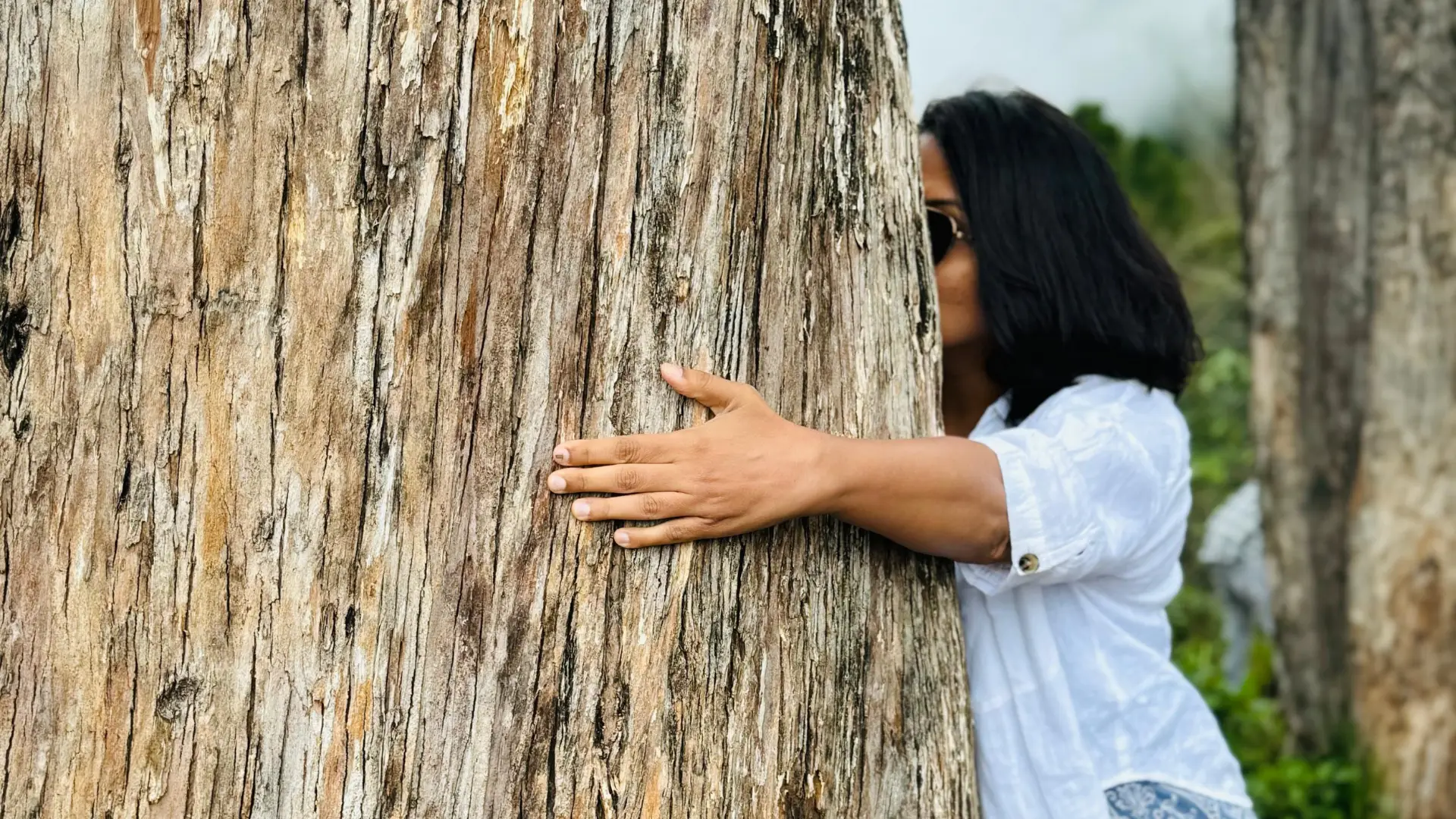
Research on natural environments specifically, the kind we build trips around in places like Bhutan or Coorg or the Himalayas, shows that time in forests and mountains lowers cortisol, improves heart rate variability, and shifts the nervous system into a calmer and more regulated state. The trees, the silence, the air that does not smell like a city. This is not aesthetic. It is something your body recognizes and responds to physiologically.
And then there is something less talked about that happens when you travel in a group of women you don't fully know yet. The conversations that happen on day three of a trip that would never happen over coffee at home. Women's nervous systems respond very specifically to feeling safe and seen in community. The relief of that, the release of it, is its own form of healing. I have watched it happen on almost every single TFL trip we have run.
The burnout nobody is naming correctly
I want to say this clearly because I think it matters.
Emotional burnout at the level many women in their 40s are carrying it is not fixed by a weekend off or a spa day. But it is interrupted by travel. Meaningfully and measurably interrupted. Because travel forces a context shift that the mind and body cannot work around. You are somewhere else. The usual triggers are not present. The usual roles, mother, manager, daughter, the person who holds everything together, have no immediate audience. For the first time in a long time, you are just a person. Somewhere new. Figuring out what she wants for dinner.
That sounds small. It is not small.
What guarantees next year?
I did reply to that Flapper. I told her I understood. And then I asked her one question. What is going to be different about next year?
Not to be unkind. But genuinely, what changes? If the exhaustion is a nervous system asking for intervention, postponement is not a treatment plan. Waiting does not reduce the load. The load is still there, next year, probably a little heavier.
I have watched women come on a Flapper Life trip carrying a lot. Low energy, physical discomfort, that particular kind of flatness that comes from running on empty for too long. And I have watched what happens by day three. They are sleeping. They are laughing in a way that looks like relief. They are having conversations they didn't know they needed to have. Not because the trip fixed them, but because the trip gave their bodies and minds a break from the conditions that were depleting them.
The body is not asking you to wait. The body is asking you to go.
There is no perfect time. There is no version of next year where everything is sorted and you finally feel ready. What arrives is another year of the same, unless you step out of it.
Ten years of The Flapper Life has shown me one thing more than anything else. The women who travel are not the women who had everything under control first. They are the women who decided that waiting for that was no longer an option.
This one is for every Flapper who is sitting on a maybe.
A Note from the Founder
~ Zinal Doshi, Founder & CEO