The Women Hidden in Stone: What Ajanta and Ellora Still Have to Teach Us
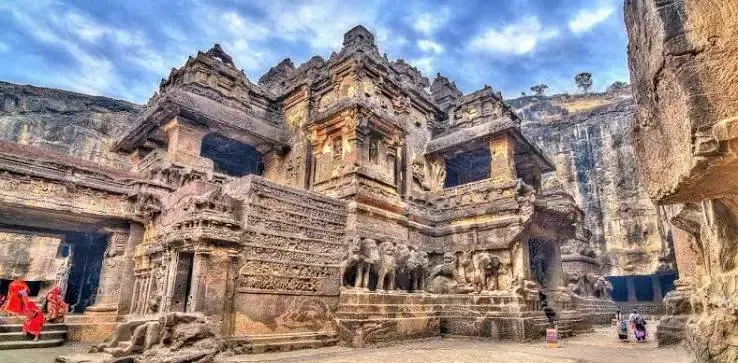
Most people visit Ajanta and Ellora looking for history.
They come to admire the breathtaking Ajanta Cave paintings, marvel at the intricate Ellora Cave sculptures, and learn about the fascinating Ajanta and Ellora history that has survived for centuries. As one of India's most treasured heritage destinations and a globally recognised UNESCO site, these caves attract travellers, artists, historians, photographers, and spiritual seekers from around the world.
And understandably so.
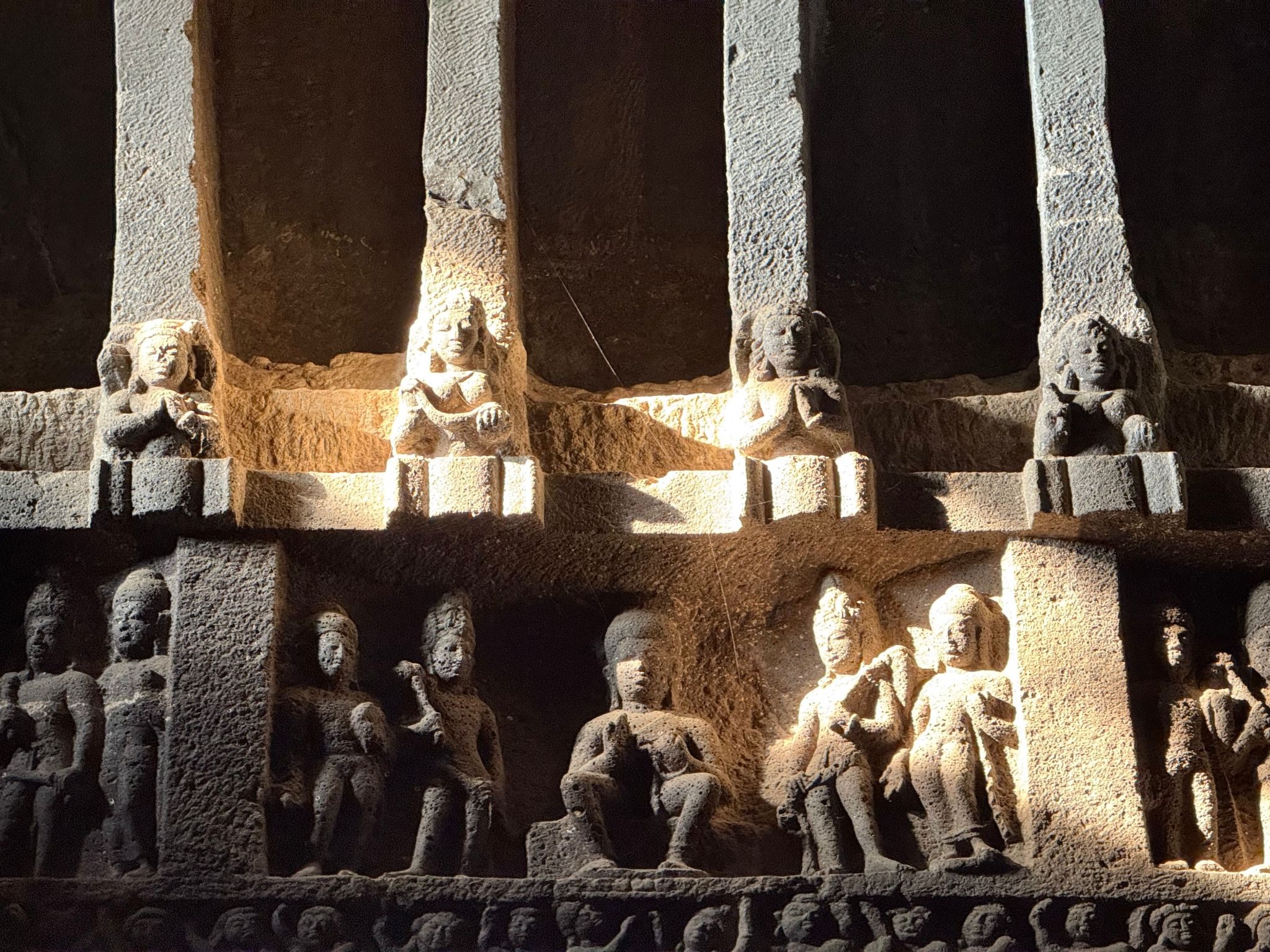
The architecture is extraordinary. The craftsmanship almost impossible to comprehend. Entire temples carved from mountains. Paintings that have survived for over a thousand years. Stories etched into stone with a level of detail that still leaves visitors speechless.
But somewhere between the guidebooks, timelines, dynasties, and architectural marvels, another story quietly exists.
The story of women.
Not the women visiting these caves today, but the women who have lived within them for centuries through art, mythology, symbolism, and memory.
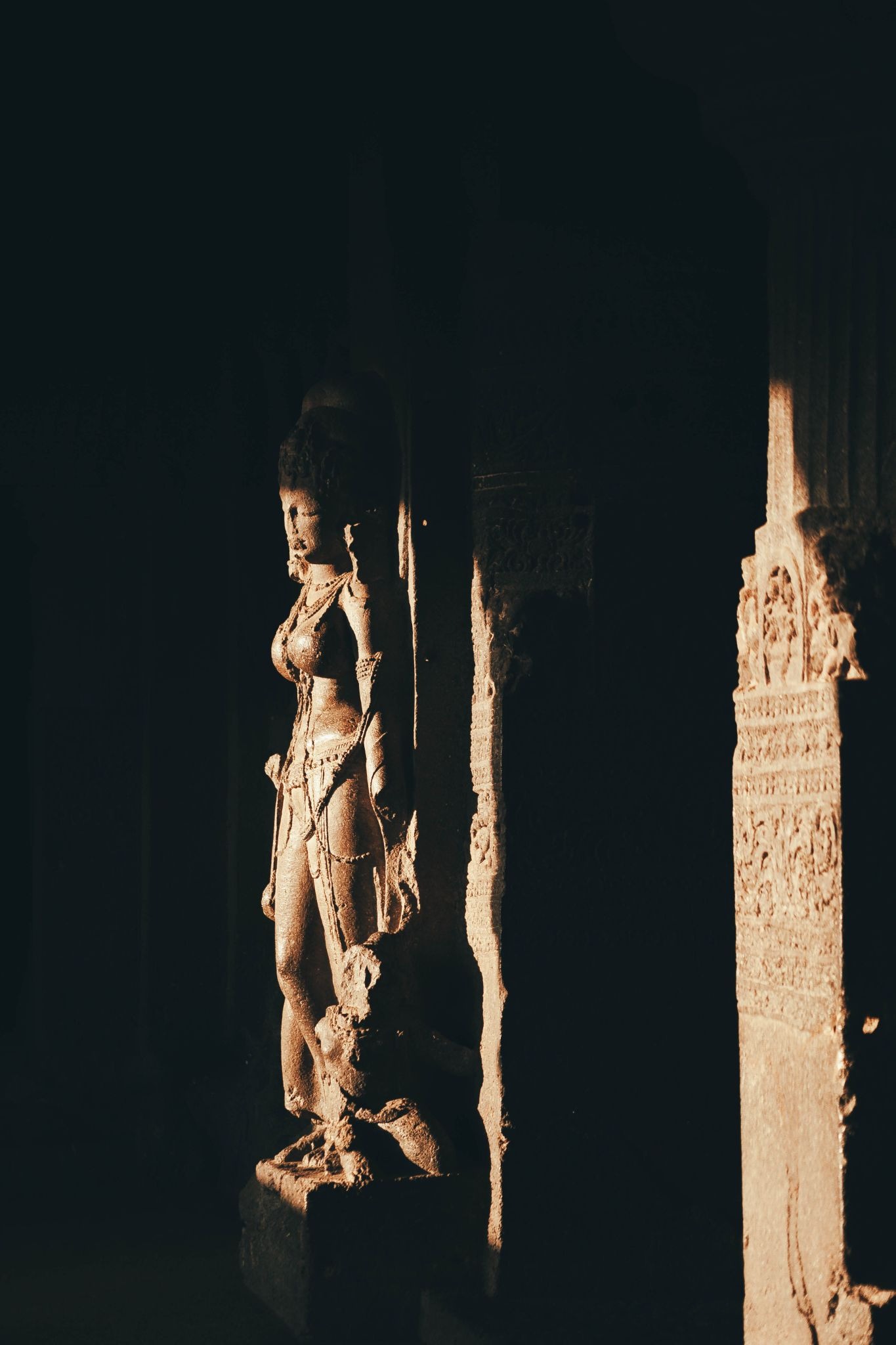
As women travellers, this is what we found ourselves returning to again and again. Not just the scale of these monuments, but the presence of women hidden in plain sight. Painted onto walls. Carved into pillars. Preserved in legends. Standing at the heart of some of the most important ideas ancient India ever imagined.
And perhaps nowhere can we better understand the role of women in ancient Indian art than in Ajanta and Ellora.
Beyond Kings and Kingdoms: Reading History Differently
When we learn history, we often learn it through rulers.
Kings.
Empires.
Wars.
Dynasties.
Dates.
Yet heritage sites like Ajanta and Ellora remind us that history is also made of stories, beliefs, relationships, and people.
Created between the 2nd century BCE and the 10th century CE, these cave complexes are much more than monuments. They are visual archives of how ancient India understood life itself. Through Buddhism, Hinduism, and Jainism, they explore ideas of devotion, morality, spirituality, creation, and human experience.
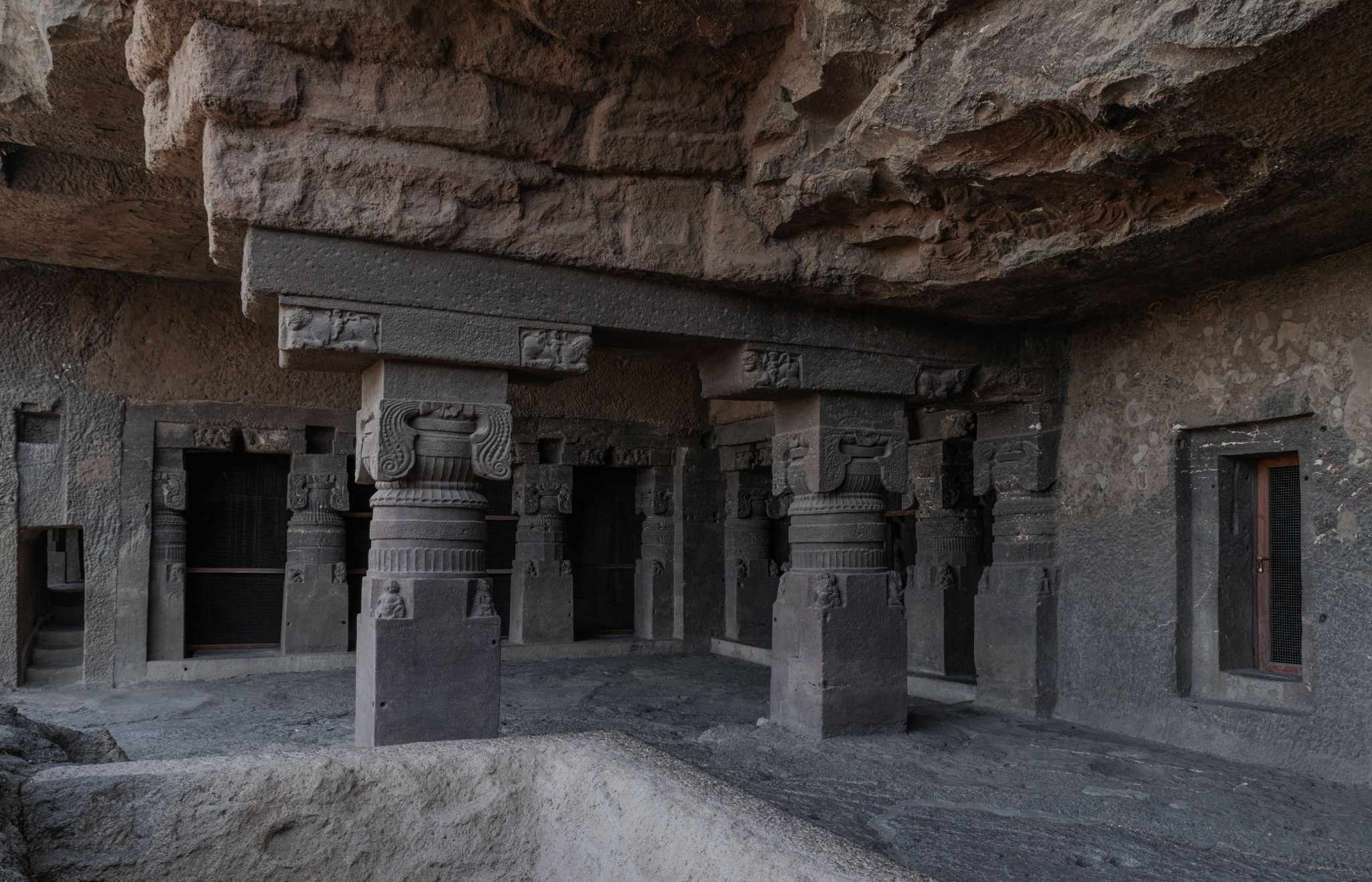
Every sculpture has meaning.
Every mural tells a story.
Every figure exists for a reason.
Which is why the women depicted here are far more than decorative details.
They are central to the narrative.
And once you begin looking for them, they appear everywhere.
The Women of Ajanta: Humanity Painted on Stone
The beauty of the Ajanta Cave paintings lies not only in their artistic brilliance but in their emotional depth.
Walk through the dimly lit caves, and you'll encounter scenes that still feel remarkably alive.
Queens listening attentively.
Mothers holding children.
Dancers mid-performance.
Women engaged in courtly life.
Attendants, devotees, musicians, and storytellers.
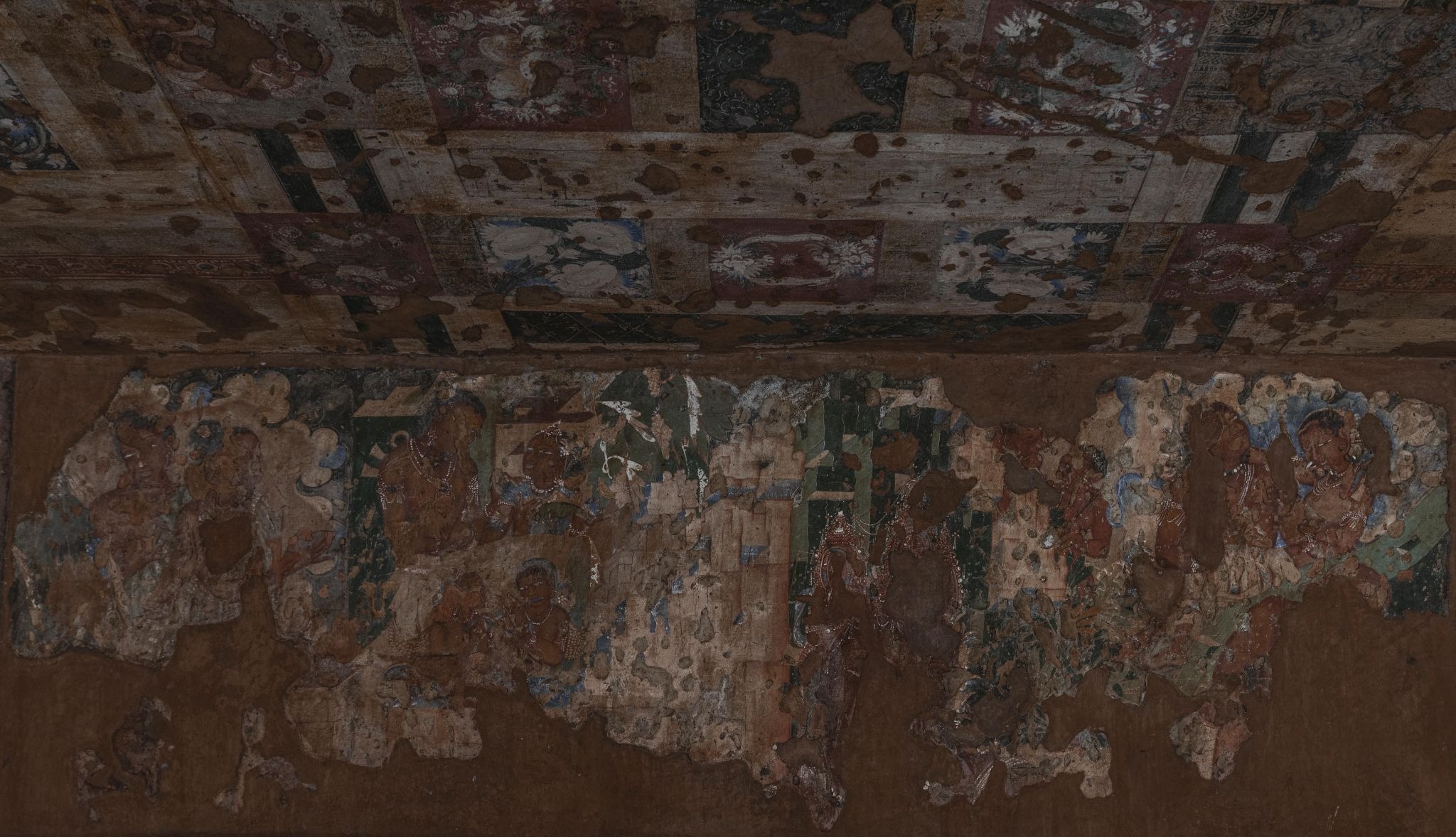
The famous female figures in Ajanta are often graceful and elegant, but reducing them to beauty alone would miss the point entirely.
What makes them extraordinary is their humanity.
Their expressions feel real.
Their emotions feel familiar.
Their presence feels intentional.
Many of the paintings depict Jataka tales, the stories of Buddha's previous lives. While these narratives focus on spiritual teachings, the women within them frequently become emotional anchors. Through them, we see compassion, sacrifice, wisdom, loyalty, patience, and resilience.
This is one of the reasons Ajanta remains such an important example of women in Buddhist art.
These women are not silent figures standing in the background.
They help carry the story forward.
And through them, we catch a glimpse of how ancient Indian women were imagined within society, not merely through their relationships to others, but through their own virtues, choices, and influence.
Hariti: A Story of Transformation
Among the most fascinating female figures found within Buddhist traditions is Hariti.
Her story begins not as a goddess or protector, but as a figure associated with fear and loss. According to Buddhist texts, Hariti was transformed through compassion and wisdom, eventually becoming a guardian of children and mothers.
It's a remarkable story because it speaks about transformation rather than perfection.
Growth rather than purity.
Change rather than judgment.
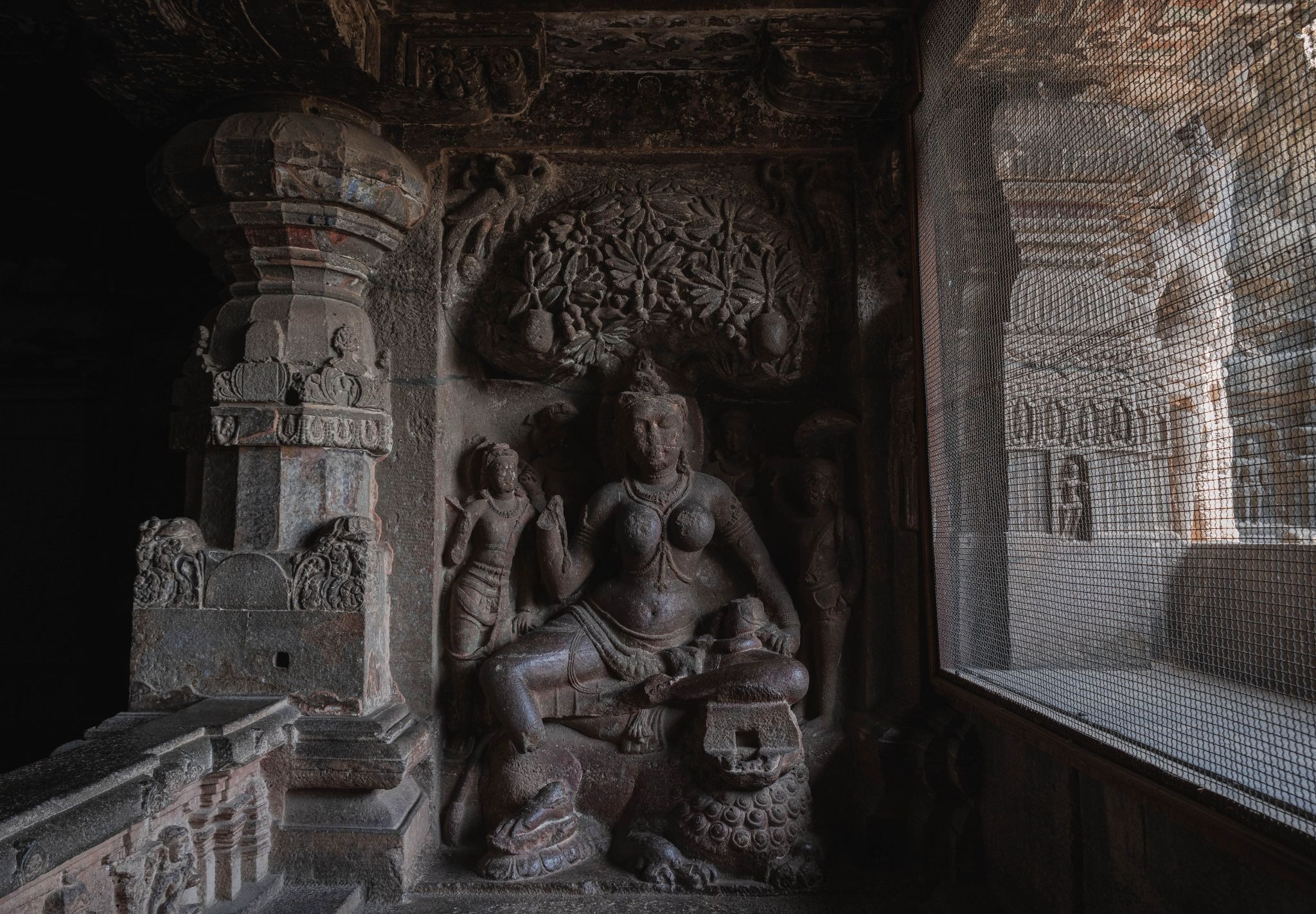
For those interested in Indian archaeology and women, Hariti offers an important reminder that female representation in ancient art was often complex and layered.
She wasn't worshipped because she was flawless.
She was respected because she evolved.
And perhaps that's why her story still resonates today.
Ellora and the Language of Power
If Ajanta feels intimate and deeply human, Ellora feels cosmic.
The scale shifts. The energy changes. The stories become larger than life.
Nowhere is this more evident than at the magnificent Kailasa Temple.
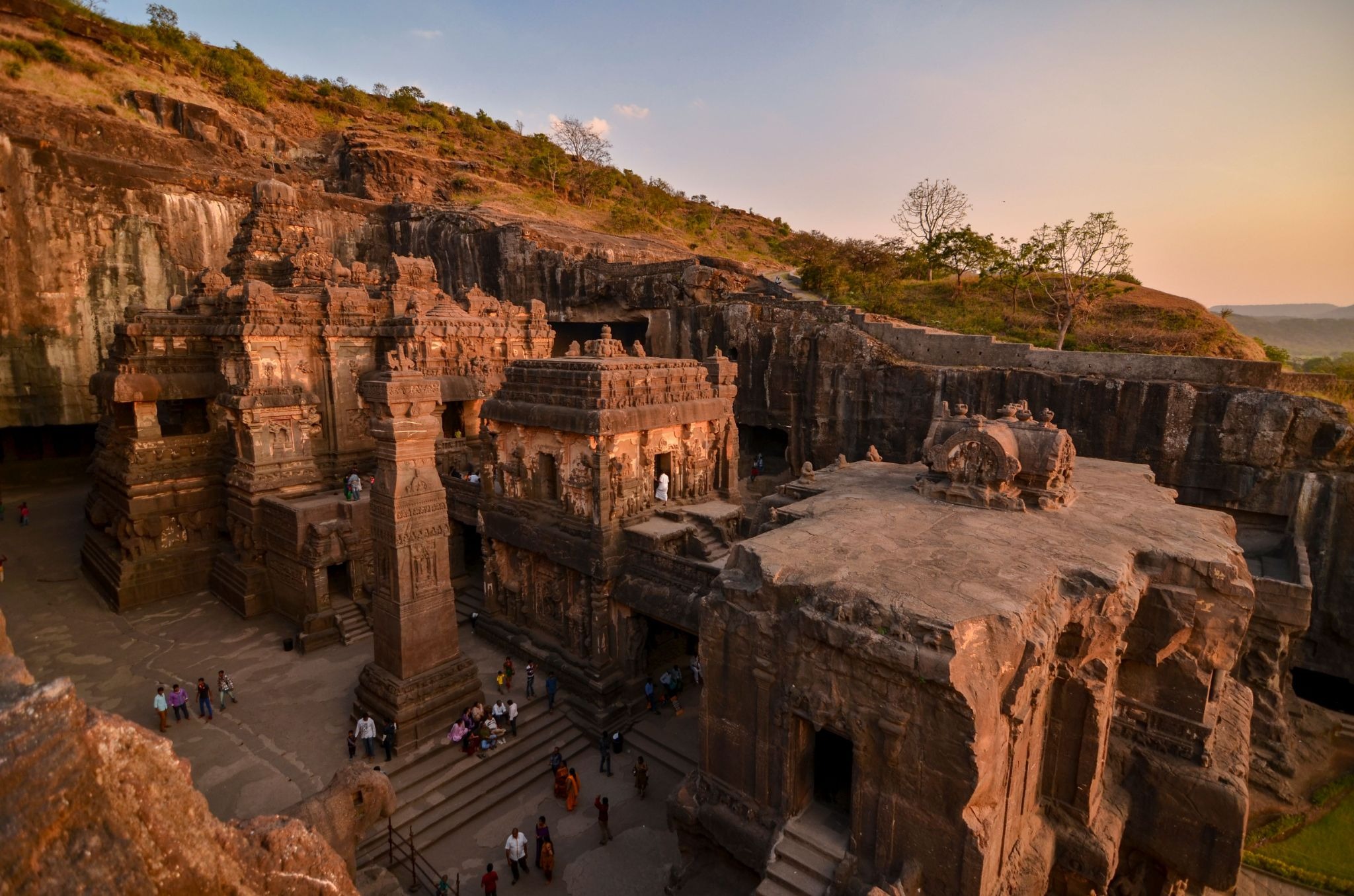
Carved entirely from a single rock, Cave 16 of Ellora remains one of the greatest architectural achievements in human history. It is dedicated to Lord Shiva and often leaves visitors awestruck by its sheer scale.
But beyond its engineering brilliance lies a powerful philosophical idea.
The relationship between Shiva and Shakti.
In Hindu thought, Shiva represents consciousness. Shakti represents energy.
Creation. Movement. Transformation. Life itself.
Without Shakti, Shiva remains pure potential. Without Shiva, Shakti lacks direction.
Together, they create balance.
And this idea sits at the heart of the sacred feminine in Indian heritage.
When viewed through this lens, the women carved throughout Ellora become much more than religious figures.
They become expressions of the forces that sustain the universe itself.
Women in Hindu Mythology: More Than Supporting Characters
One of the most striking aspects of the Ellora Cave sculptures is how often a powerful female divinity appears.
Parvati.
Durga.
Lakshmi.
Ganga.
Yamuna.
The Sapta Matrikas.
Each represents a different aspect of existence and power. And each tells us something about how ancient India understood femininity.
Durga is perhaps one of the strongest examples. When the gods fail to defeat the buffalo demon Mahishasura, it is Durga who rises to confront him.
She is courageous. Protection. Strength. Righteous action.
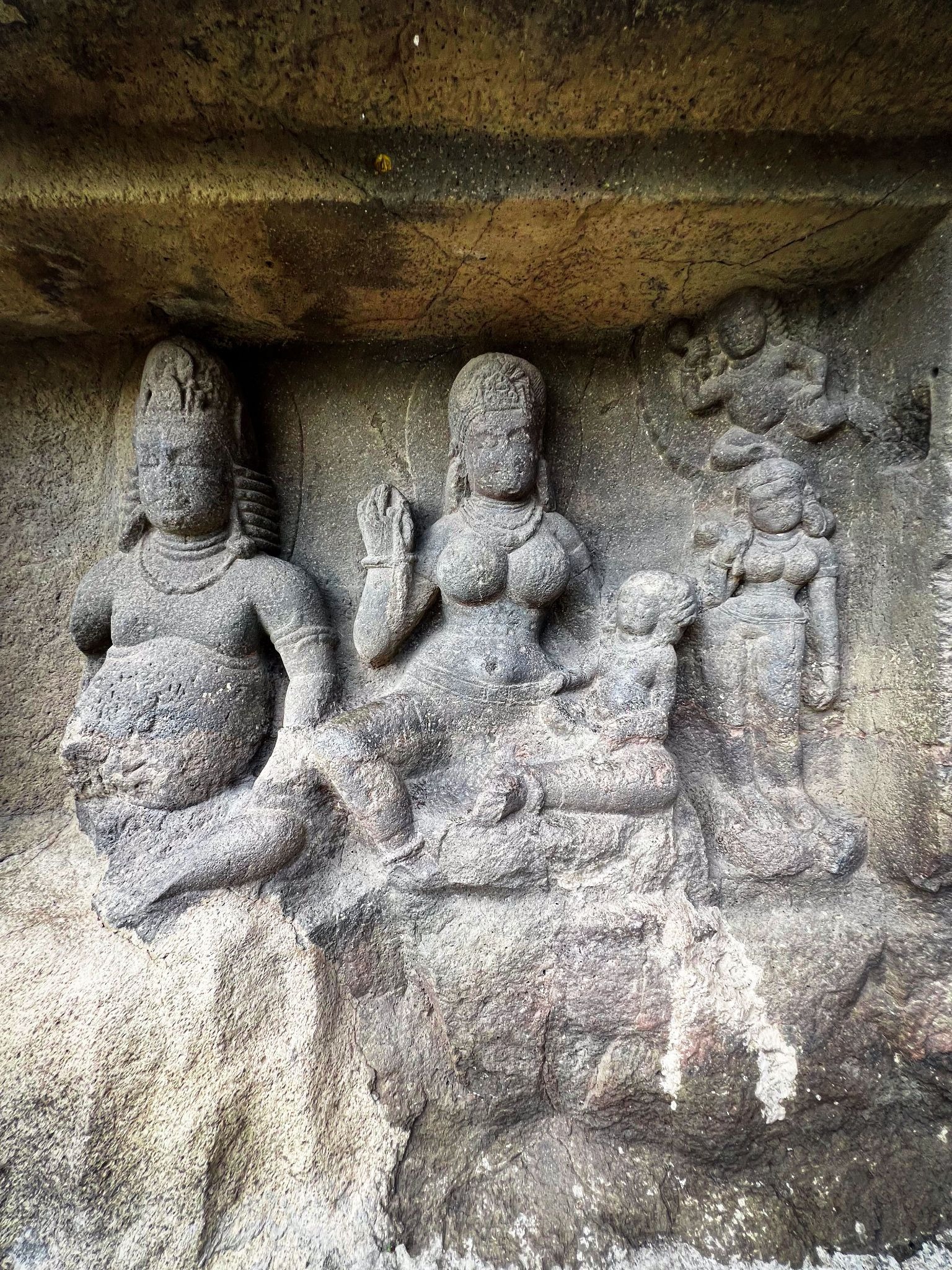
Similarly, Parvati is often portrayed not merely as Shiva's companion but as a powerful force in her own right.
Lakshmi symbolises prosperity and abundance.
River goddesses represent life-giving energy.
These depictions reveal why women in Hindu mythology continue to hold such relevance today.
They are not secondary figures orbiting male heroes. They are creators, protectors, warriors, nurturers, and leaders. They are among India's oldest and most enduring ancient Indian female icons.
The Sacred Feminine Was Never Separate From Power
Perhaps one of the most fascinating lessons hidden within Ajanta and Ellora is that ancient Indian culture rarely separated femininity from strength.
Modern conversations often frame nurturing and power as opposites. These caves suggest otherwise.
Again and again, the feminine appears as both compassionate and powerful.
Gentle and fierce.
Protective and transformative.
Whether through Buddhist narratives or Hindu mythology, the message remains consistent. The feminine is not a supporting force. It is a foundational one. And this idea continues to echo through the stories preserved here.
Why These Stories Still Matter
It would be easy to think of these caves as relics of a distant past. Places frozen in time. But the questions they raise feel surprisingly modern.
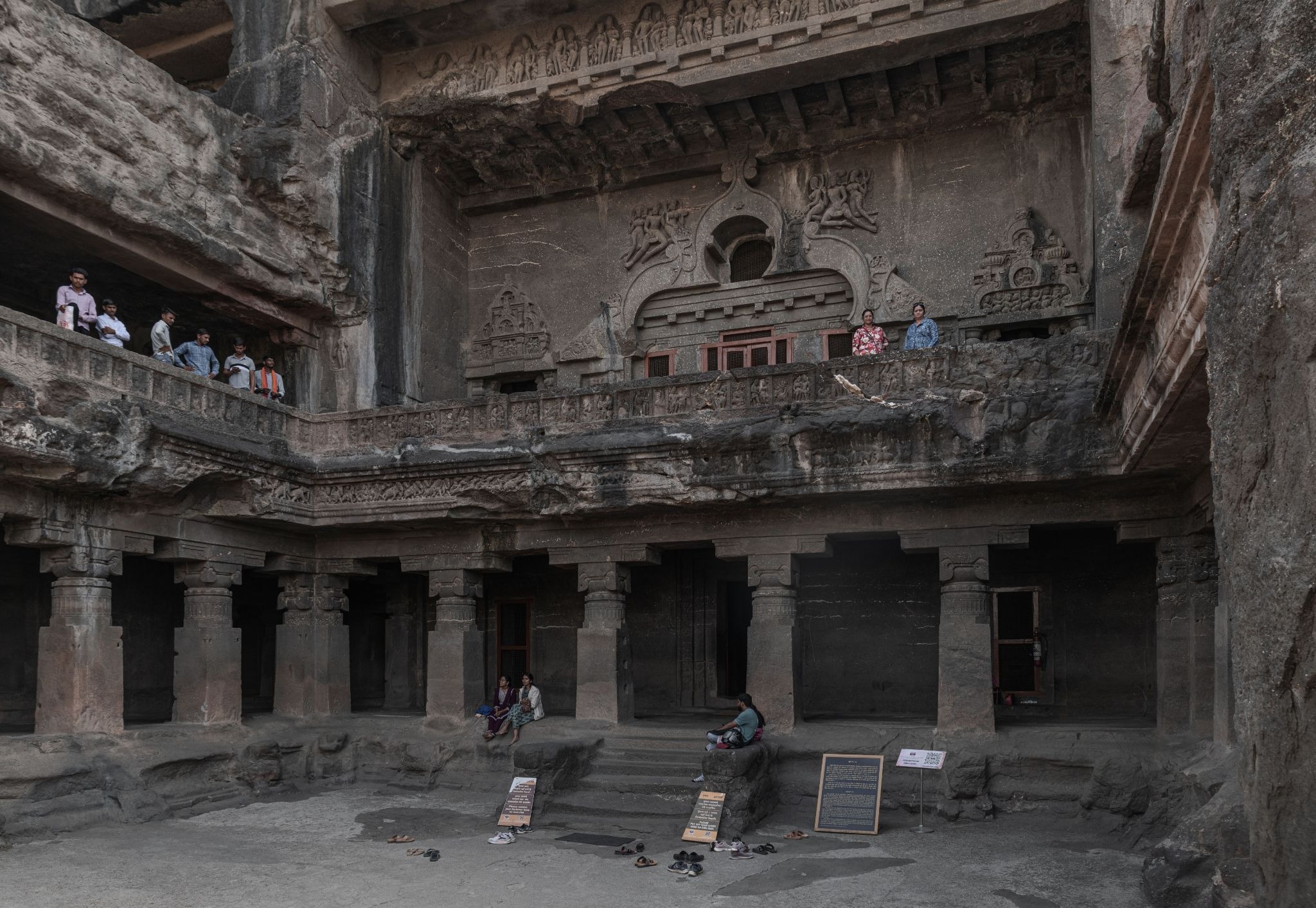
Who gets remembered?
Whose stories survive?
How do societies define strength?
What roles do women play in shaping culture?
The more we explored these caves, the more we realised that the story of women in Indian heritage deserves far more attention than it often receives. Because these women were never absent from history. They were simply hidden beneath layers of interpretation that focused elsewhere.
Ajanta and Ellora invite us to look again.
To read the carvings differently. To notice the women who have always been there. Waiting patiently in paint and stone.
Heritage Storytelling at Its Most Powerful
What makes these caves truly unforgettable is not just their artistic brilliance. It's the way they allow us to connect with ideas that have survived for centuries.
Compassion. Courage. Transformation. Creation. Resilience.
When viewed through the lens of heritage storytelling, India, Ajanta and Ellora become more than archaeological sites.
They become conversations.
Conversations between the past and the present. Between mythology and reality. Between culture and identity.
And woven through those conversations are countless women whose stories still have something to teach us.
Walk Through These Stories With Us
Ajanta and Ellora are often described as monuments.
But after spending time here, that word feels too small.
These caves are living archives of art, mythology, philosophy, faith, and culture. And among their most fascinating stories is the story of women, the queens, mothers, goddesses, devotees, protectors, and creators who helped shape India's cultural imagination.
If you love history, mythology, architecture, culture, and discovering the deeper narratives hidden within a destination, this journey offers far more than sightseeing.
It offers perspective.
It offers connection.
And perhaps, it offers a chance to see one of India's most iconic heritage sites through an entirely different lens.
Join us on our upcoming Ajanta & Ellora journey and discover the stories, symbols, and women hidden within these extraordinary caves.
Because some trips help you see a destination.
The best ones help you see it differently.