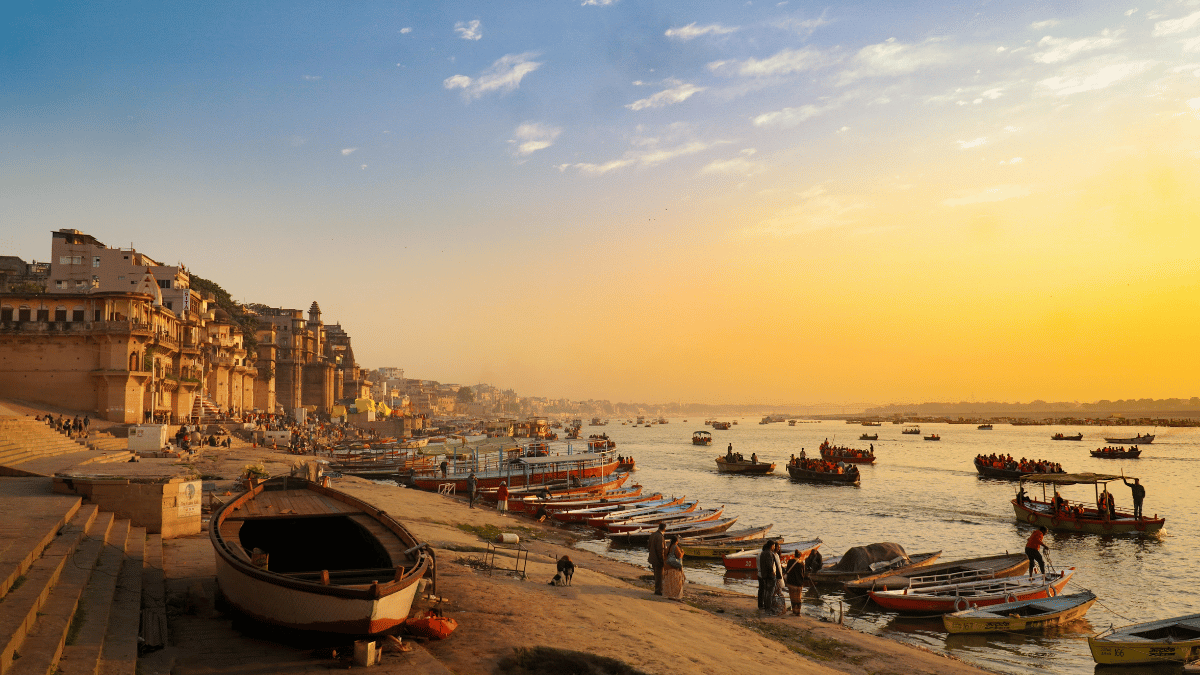
There are cities in India that are simply old, and then there is Varanasi, which is old in a way that is almost impossible to hold in your mind. One of the oldest continuously inhabited cities on earth, it has been a place of pilgrimage, scholarship, music, weaving, and devotion for over three thousand years. Civilisations have risen and fallen around it. The Ganges has continued to flow. And every single morning, before the sun is fully up, the ghats come alive with the sounds of bells, conch shells, prayer, and the particular hush of thousands of people standing at the edge of a sacred river and asking for something.
Coming to Varanasi during Dev Diwali is not simply visiting a city during a festival. It is arriving at the moment when Varanasi is most completely itself. Dev Diwali, celebrated on the full moon night of Kartik Purnima, fifteen days after Diwali, is the night when Lord Shiva is said to have defeated the demon Tripurasura and the gods descended to the ghats to celebrate. Every ghat along the Ganges is lit with thousands of earthen lamps. The reflection of this light on the river creates a sight that is genuinely difficult to describe and impossible to forget. Watching the Dev Diwali Ganga Aarti from a boat on the river, with the flames and the chanting and the city glowing on both sides, is one of the most extraordinary experiences available in India.
But Varanasi before Dev Diwali is equally compelling. The Subah e Banaras at Assi Ghat at sunrise, where the morning Ganga Aarti is performed in the first light of day, sets a tone of quiet reverence that stays with you through the rest of the trip. The walk from Assi Ghat through Manikarnika and up to Godowlia is the walk that every honest account of Varanasi centres on, passing the burning ghat where cremations have continued without interruption for centuries, through narrow lanes that smell of incense and jasmine and frying kachoris, past chai wallahs and flower sellers and sadhus and schoolchildren, until the city opens up at the Kashi Vishwanath Temple, which has been a centre of Shaivite devotion for as long as Varanasi itself.
The Kaal Bhairav Temple, dedicated to the fierce form of Shiva who is the guardian deity of Varanasi, and Sarnath, where the Buddha delivered his first sermon after attaining enlightenment and where the Dhamekh Stupa stands in its beautifully maintained park, round out the spiritual geography of the city. Sarnath is just a short drive from the old city and adds a Buddhist dimension to the trip that surprises most visitors with its beauty and its quietness.
Prayagraj, an excursion from Varanasi, holds the Triveni Sangam, the confluence of the Ganga, Yamuna, and the mythical Saraswati rivers, one of the holiest spots in Hinduism. The sites around it, including the Hanuman Temple, Akshayavat, the sacred banyan tree inside the Allahabad Fort, and the Alopi Devi Temple, offer a complete and deeply moving day of pilgrimage in one of India’s most sacred cities.
And through all of it, Banarasi food is doing its own important work. Kachoris at a lane side stall. Kulhad chai by the ghats. Chaat at Godowlia. The lassi that is so thick it barely pours. Banarasi silk from shops that have been selling the same fabric for generations. Varanasi is a city that feeds every sense, and five days here is not too long. It is just enough to begin to understand it.