Sikkim · Nov 12, 2026

Sikkim: Beyond the Clouds

Sikkim is the kind of place that makes you forget everything you left behind. Snow peaks on the horizon, glacial lakes that reflect the sky, valleys carpeted in wildflowers, and the best momos you will ever eat. India’s smallest state holds more beauty per square kilometre than almost anywhere else on earth.

Duration
6 Nights / 7 Days
Start
12 Nov 2026, 06:00 AM
End
18 Nov 2026, 06:00 PM
Location
Bagdogra, Sikkim
Group Size
Max 10 guests

Overview

There are places in India that feel genuinely removed from the ordinary world, where the air is different, the light is different, and the pace of everything slows down in a way that feels not like laziness but like rightness. Sikkim is one of those places. India’s smallest state, tucked into the eastern Himalayas between Nepal, Tibet, and Bhutan, it is a kingdom that became a state less than fifty years ago and still carries the quiet dignity and deep spiritual character of its independent past.

Sikkim is also the first fully organic state in the world, certified since 2016, which means the food is fresher, the land is cleaner, and the relationship between the people and their landscape is one of genuine care rather than extraction. Walking through it, you feel that care in the quality of the air and the colour of the hills.

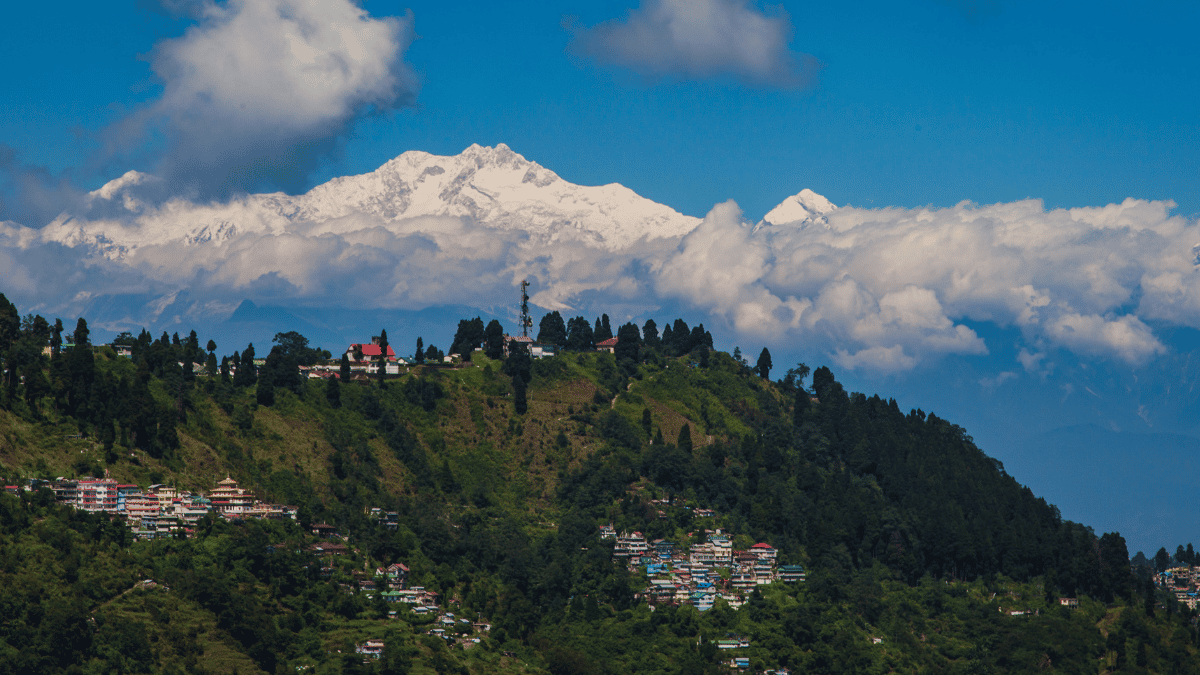
Gangtok, the capital, sits at over 1650 metres and is one of the most pleasant hill capitals in India. It is the base for the first two days of the trip, and it earns that time easily. The drive up from Bagdogra offers the first views of the Khangchendzonga range on a clear day, the third highest mountain on earth, rising white and enormous above the forested ridges. Gangtok itself is a city of monasteries, viewpoints, cake shops, and the particular warm energy of a Himalayan town that has learned to welcome visitors without losing itself.

Tsongmo Lake, at 3753 metres, is a glacial lake sitting in a bowl of mountains near the Tibetan Plateau. Reaching it is an experience of altitude and extraordinary beauty, the lake’s surface shifting colour with the light and the season, the surrounding slopes dotted with rhododendron and prayer flags. Baba Mandir, dedicated to a revered Indian Army soldier believed to protect travellers on these mountain roads, adds a dimension of faith and military history that is specific to the frontier landscapes of the northeast.

The drive to Lachung is one of the most beautiful mountain drives in India, following the Teesta river through a corridor of waterfalls, pine forests, and increasingly dramatic Himalayan scenery. The Singhik viewpoint, where the Kanaka and Teesta rivers meet below and the Kanchenjunga ranges rise above, is the kind of view that stops conversation completely.

Yumthang Valley, at 3564 metres, is Sikkim’s Valley of Flowers, a high altitude sanctuary of wildflowers, hot springs, yaks, and meadows ringed by snow peaks. In November the flowers have given way to the first cold and the landscape is spare and elemental and deeply beautiful in a different way. The hot springs here, surrounded by mountains, are one of the most quietly extraordinary experiences of the trip.

The route back south passes through Ravangla, where the 130 foot statue of Lord Buddha at the Namchi Buddha Park looks out over the Temi Tea Gardens and Cho Djo Lake below, before arriving in Pelling for the final full day of the trip. Pelling offers some of the most unobstructed views of the Kanchenjunga in all of Sikkim, and the surrounding area holds Darap Village, where the traditional lifestyle of the Sikkimese people can be experienced unhurriedly, and two beautiful waterfalls, Rimbi and Kanchenjunga, believed to originate from the glaciers of the mountain itself.

Seven days in Sikkim is not too long. It is exactly enough.
Pricing
Base Price ₹ 58000
GST (5.00%) ₹ 2900
Payment Gateway Charge (2.50%) ₹ 1523
Total ₹ 62423
Inclusive of all taxes & payment charges
₹ 62423
Max 10 seats available
Book This Journey

Things to know before journey

Everything you might want to ask before you book this journey.

Do we need any special permits to visit Sikkim? +

Yes. Certain areas of Sikkim, including Tsongmo Lake and Lachung, require Inner Line Permits for Indian nationals. These permits are included in the trip cost and TFL arranges them on behalf of all travellers. You will need to carry valid photo identification, and passport sized photographs may be required. Foreign nationals require additional permits, so please check with the team before booking.

What is Tsongmo Lake and what makes it special? +

Tsongmo Lake, also known as Changu Lake, is a glacial lake sitting at 3753 metres above sea level near the Nathula Pass on the Indo Tibetan border. It is one of the few glacial lakes in India accessible by road and is surrounded by steep mountain slopes covered in alpine vegetation and rhododendron. The lake’s colour changes with the seasons, from deep blue in summer to frozen white in winter. November visits offer clear skies and the first hints of winter, with the surrounding mountains at their most dramatic.

What is the Kanchenjunga and can we see it on this trip? +

Khangchendzonga, or Kanchenjunga, is the third highest mountain in the world at 8586 metres and is the presiding deity of Sikkim. It is visible from multiple points across the state on clear days, including from Gangtok on the drive up from Bagdogra, from the Singhik viewpoint on the way to Lachung, and most dramatically from Pelling, which offers some of the most unobstructed views of the mountain anywhere in Sikkim. November is an excellent month for mountain views as the monsoon has cleared and the air is crisp and clean.

What is the weather like in Sikkim in November? +

November is a beautiful time to visit Sikkim. The monsoon has completely cleared, the skies are crisp and blue, and the mountain views are at their finest. Temperatures in Gangtok and Pelling range from around 8 to 18 degrees Celsius during the day, dropping to near zero at night. At higher altitudes like Tsongmo Lake and Yumthang Valley it will be significantly colder, with temperatures potentially well below zero. Warm layering is essential, a good down jacket, thermal innerwear, gloves, and a woollen hat, particularly for the high altitude excursions.

How do we get to Sikkim to join the trip? +

The nearest airport is Bagdogra in West Bengal, which is well connected to Mumbai, Delhi, Kolkata, Bangalore, and several other cities. From Bagdogra the group drives to Gangtok, a journey of approximately 5 hours through the foothills and the Teesta valley. TFL handles all transfers from Bagdogra airport onwards. Please book flights into and out of Bagdogra and coordinate your travel timings with the team before booking.