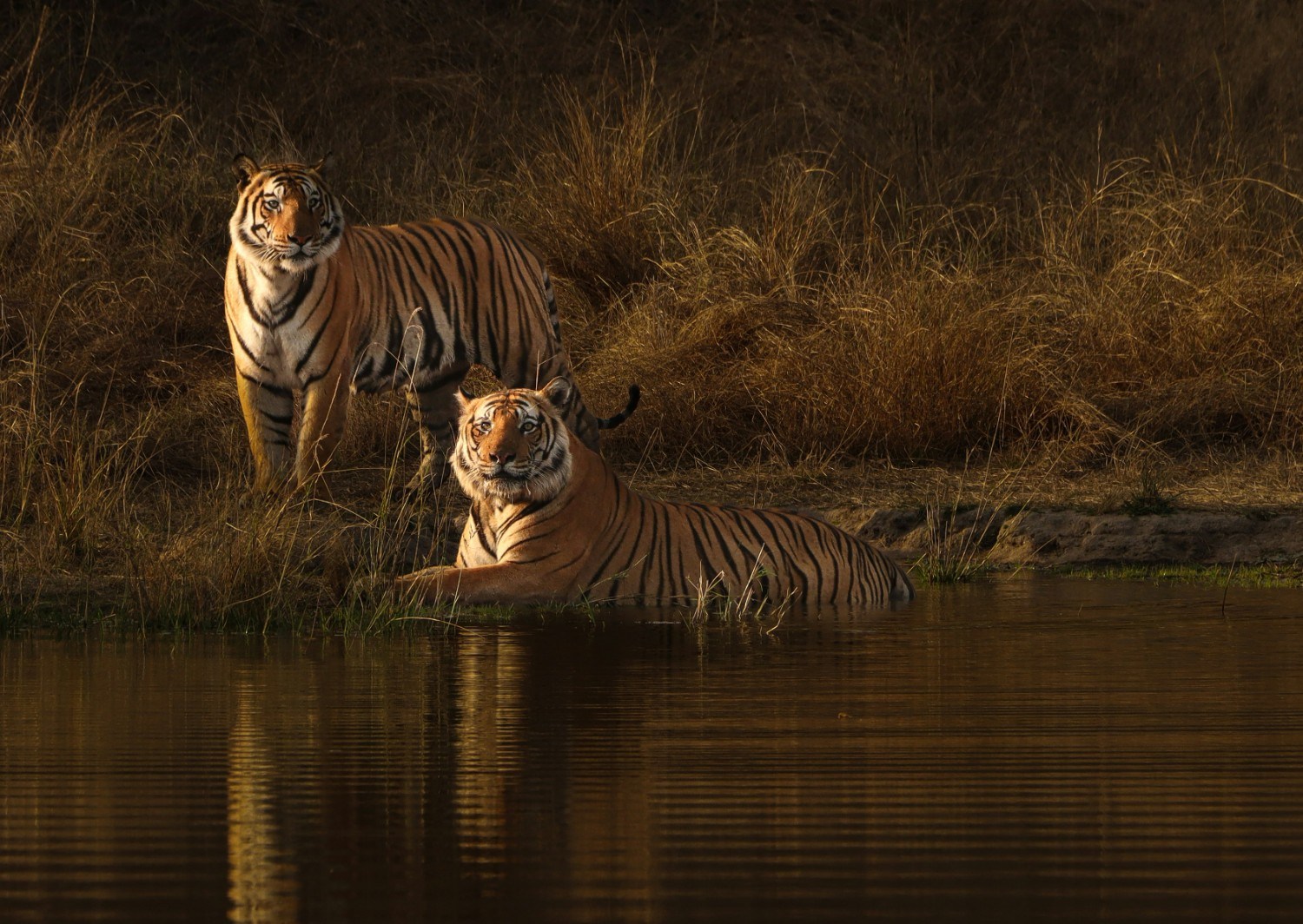
What do Rajasthan's royal forts, ancient ruins and Bengal tigers have in common? They all have stories that have survived for centuries. Most people go to Rajasthan for the palaces, the bazaars and the desert, but there's another side to the state that's just as good to look at. A side where the kings of the jungle reign, where lakes sit in rocky hills, and where a tiger could very well walk past the ruins of an old kingdom. That's Ranthambore National Park!
Ranthambore is one of India's most popular wildlife destinations. It's situated between the Aravalli and Vindhya hill ranges, so it's by no means the dense forest you'd expect in a tiger reserve. It's dry deciduous forest giving way to grassy clearings, rocky ridges with attractive lakes, and ancient ruins tucked away in the middle of the wild. Right at the centre of it all is the magnificent Bengal tiger.
A former royal hunting ground of the House of Jaipur, Ranthambore is now one of India's most famous tiger reserves. The 10th-century Ranthambore Fort is there, as is a number of lakes in the area (Padam Talao and Rajbagh Talao) which are full of wildlife all year round. On a safari, you could see crocs basking in the sun by the water, deer out in the open, langurs in the trees, and a leopard disappearing into the rocks. Of course there's the tiger. Seeing one walk through that landscape is an experience you just can't forget.
We're trading the well-worn Rajasthan tourist tracks for the wild side of the state over the next three days with three Ranthambore tiger safaris. Each drive will be a different experience in terms of what you actually see in the forest. You could well see a tiger lying in a lake; you could well spot a track across the forest; you could well catch a flash of its stripes in the trees. Of course there's no guarantee of a tiger on any of the safaris, as the forest has its own mind. There's absolutely plenty to keep you looking on a day without a tiger.
April is a completely different month at Ranthambore. The winter crowds and cool mornings are long gone, and you have warmer, drier days with the vegetation thinning out considerably. This can actually make the animals easier to see. As temperatures rise, animals will visit water sources much more frequently, and that's where you'll find them. The safaris run in the early morning and again in the afternoon when it's not quite so hot. Sun protection, light comfortable clothing and lots of water are all things you'll need to have with you.
You don't need to be a bit of a wildlife nut to go. If you've always wanted to do a jungle safari and just didn't know where to start, then Ranthambore is a great place to begin. It's a well-established destination with a strong safari system, experienced naturalists, and plenty to see beyond the big cats. Doing it in a women-only group is a lot of fun, really, as you can build up to a sighting with the others, share in the sheer excitement, and enjoy all the post-safari talk. With the Flapper Coach and all the travel sorted, then the solo female traveller just turns up ready to go.
If Rajasthan's royal past is high on your list, then this is a good reason to go back. Three days, three safaris and a chance to experience the wild side of the state. You're there for the tigers; you'll stay for the forest, and Ranthambore is bound to be a very different chapter in your Rajasthan story.