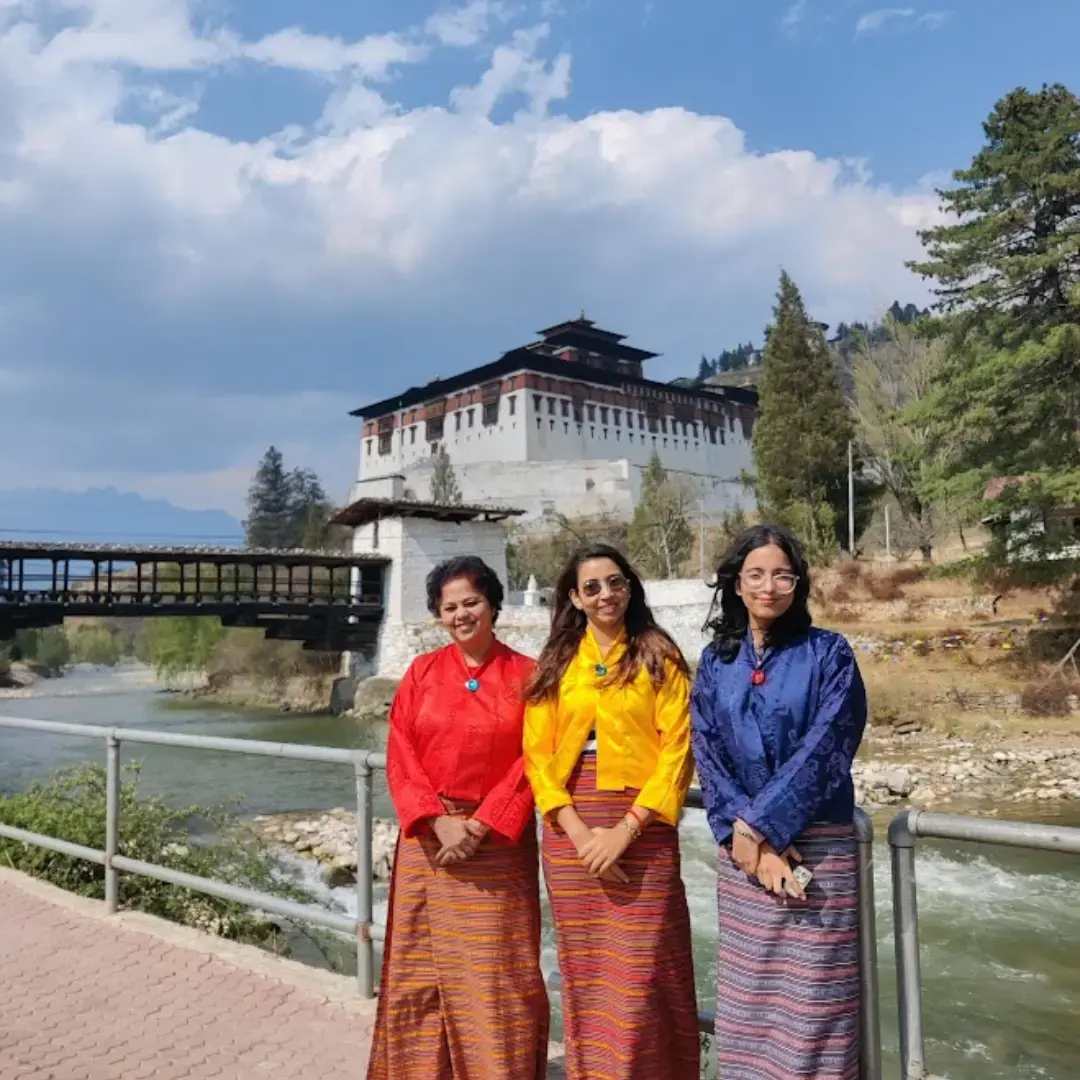
Most people ring in the new year in the same city, with the same people, doing the same things. This year, do it differently. Do it in the kingdom of the thunder dragon, where happiness is national policy and the mountains touch the clouds.
There are very few places left in the world that feel genuinely untouched by the relentless pace of modern life. Bhutan is one of them. Tucked into the eastern Himalayas between India and Tibet, it is a kingdom that has chosen a different relationship with progress, measuring its success not in GDP but in Gross National Happiness. The result is a country that feels like it exists slightly outside of ordinary time, where monasteries perch on cliff faces, prayer flags flutter above river valleys, and the air at high altitude carries a cold, clean clarity that seems to clear your head of everything that does not matter.
Ringing in the new year here is not about countdowns and champagne and noise. It is about beginning a new chapter in a place that asks you to slow down, look around, and remember what actually counts. The mountains do not care what year it is. The monasteries have been standing for centuries. And the warmth of the Bhutanese people, deeply rooted in their Buddhist faith and their pride in their small, protected kingdom, offers the kind of welcome that makes you feel genuinely held rather than simply catered to.
Bhutan’s three main valleys each have their own distinct character. Paro, the entry point, is home to the country’s only international airport and to Taktsang Monastery, the famous Tiger’s Nest, one of the most iconic and spiritually charged sites in the Himalayan world. The trek to reach it, rising steeply through pine forest above the Paro valley, is one of those experiences that asks something of you physically and gives back something much larger in return.
Thimphu, the capital, is a city like no other in the world. It has no traffic lights, the dzong that serves as the seat of government is built in traditional Bhutanese architecture without a single nail, and the weekend market where farmers come down from the hills to sell produce, textiles, and incense is one of the most authentic market experiences in South Asia. Walking through Thimphu gives you a city that is modernising on its own terms, carefully and deliberately, without losing what makes it Bhutanese.
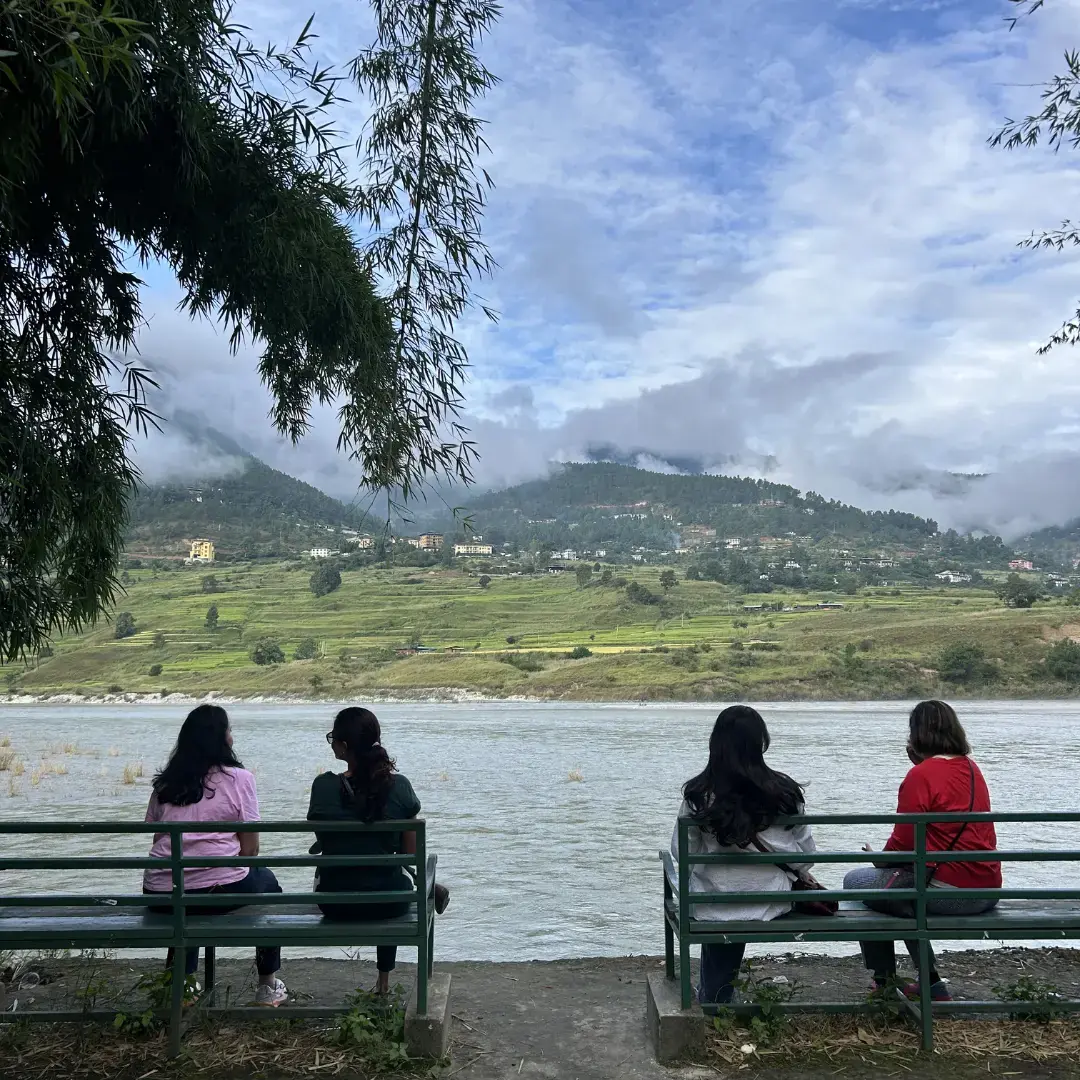
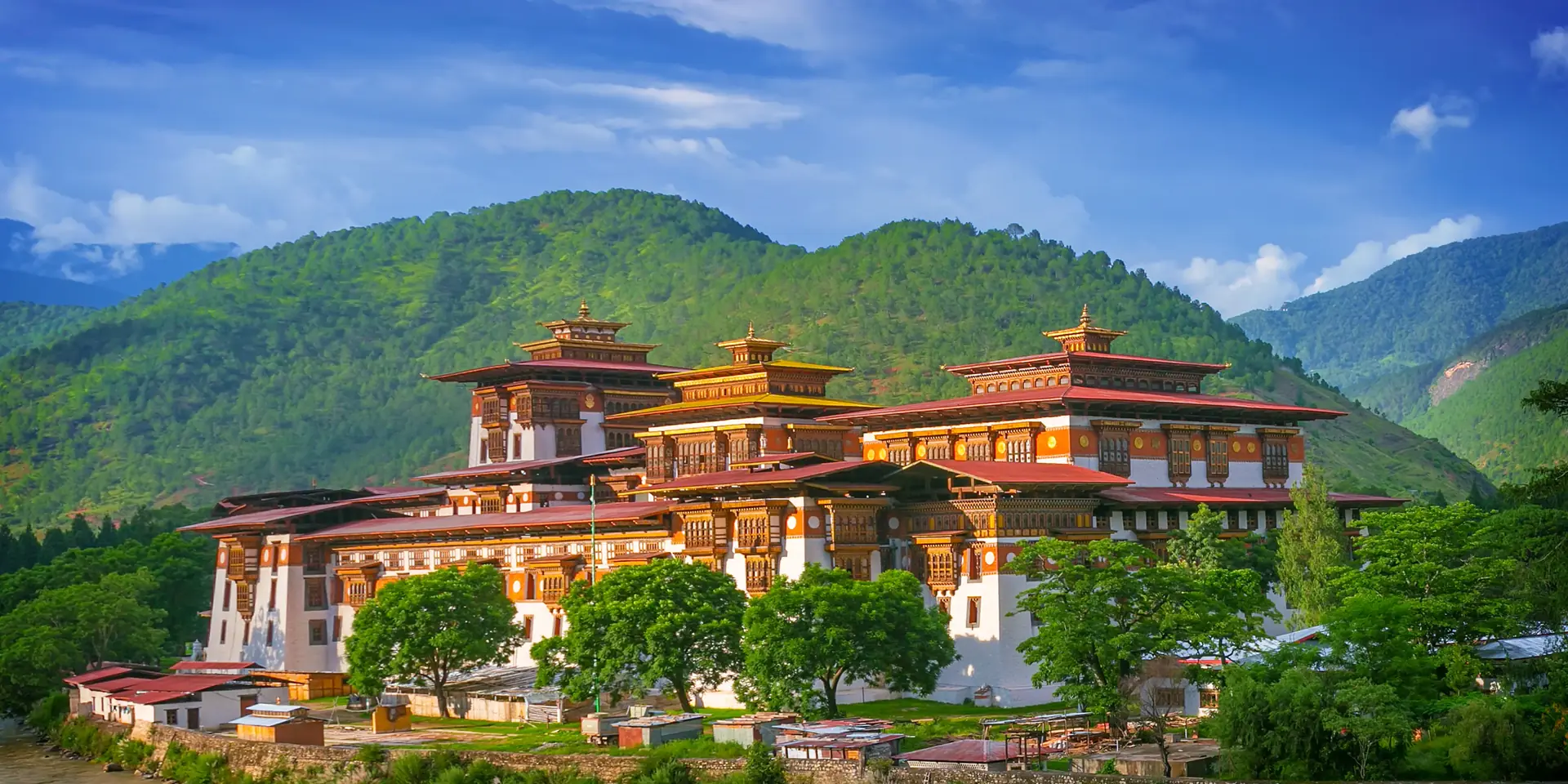
Punakha, the ancient capital, sits in one of the most beautiful valleys in the kingdom, where the Pho Chhu and Mo Chhu rivers converge below the magnificent Punakha Dzong. The dzong itself, whitewashed and immense, sits at the joining of the two rivers and is considered the most beautiful building in Bhutan. The valley is warm and fertile, growing rice and oranges in the shadow of the Himalayas, and the drive from Thimphu over the Dochula Pass, with its 108 chortens and views of the Great Himalayan range on a clear day, is one of the most spectacular mountain drives anywhere in Asia.
Crossing into the new year in Bhutan is an act of intention. You are choosing to begin again in a place that believes deeply in the value of inner peace, in the protection of culture and nature, and in the idea that happiness is something worth measuring and pursuing. That is a very good way to start a year.
Everything you might want to ask before you book this journey.
No visa is required. Indian nationals do not require a visa to enter Bhutan. Instead, the Royal Government of Bhutan provides an Entry Permit upon arrival, and Indian travellers can present either a valid passport with at least six months' validity or a government-issued Voter ID card. This makes Bhutan one of the easiest international destinations for women travelling from India. A Sustainable Development Fee (SDF) does apply per night, which is included in The Flapper Life's trip pricing.
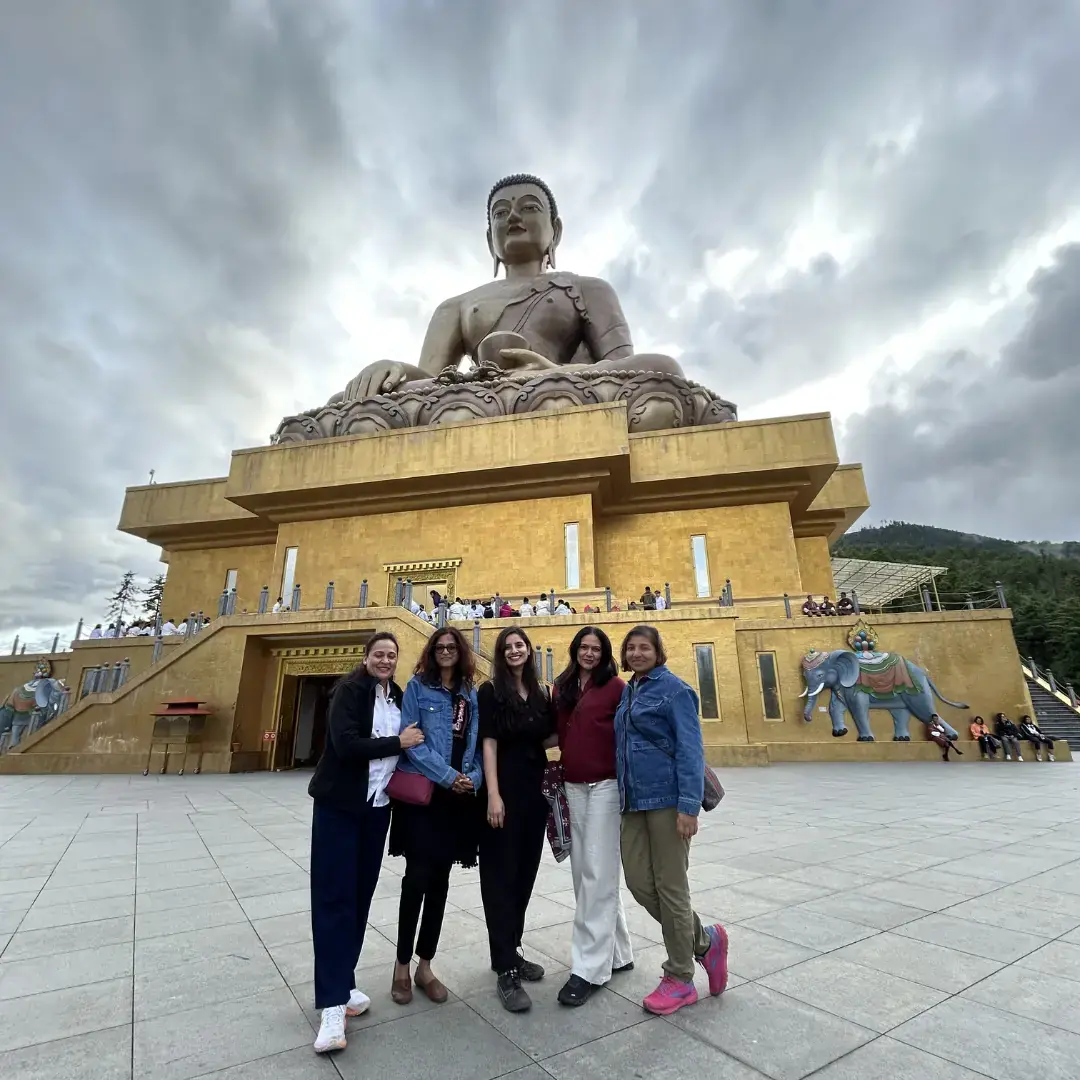
The classic circuit covers Paro, Thimphu, and Punakha, and each has its own character. Paro is home to the Tiger's Nest, one of the most iconic hikes in the world. Thimphu captivates with its mix of natural beauty, history, and culture — from the lively Weekend Market to the historic Tashichho Dzong and the majestic Buddha Dordenma Statue. Punakha is breathtaking in its river valley setting and home to one of Bhutan's most magnificent fortresses. Beyond these, Phobjikha Valley and Dochula Pass are the kind of places that stay with you long after you leave.
Late December and early January in Bhutan is winter. Temperatures in the valleys range from around 5 to 15 degrees Celsius during the day and can drop below zero at night, particularly in Thimphu and at higher elevations. Paro and Punakha are slightly warmer. The skies are typically clear and bright, offering spectacular mountain views including the Great Himalayan range from the Dochula Pass. Pack warm layers, a good down jacket, thermal innerwear, and comfortable walking shoes. The cold is dry and manageable and the clear winter light makes for some of the most beautiful photography of the year.
Most of the classic Bhutan itinerary is accessible to women of all fitness levels. The one experience that requires preparation is the Tiger's Nest hike — a round-trip hike of approximately four to five hours to reach the monastery. It is rewarding rather than extreme, and many women across age groups complete it comfortably with the right pacing. The Flapper Life plans all trips with different energy levels in mind, so no one feels left behind.
Bhutan is a deeply spiritual country and modest dressing is important, particularly at religious sites. Covering shoulders and knees when visiting dzongs, monasteries, and temples is expected and respectful. Pack for diverse conditions and layer up, as Bhutan's weather varies significantly across regions and elevations. Comfortable walking shoes are essential. Casual and smart-casual clothing works well everywhere else — Bhutanese towns are relaxed and stylish in their own way.
The national language is Dzongkha, but English is widely spoken across tourist areas, hotels, restaurants, and among guides. English is a widely spoken language in tourist areas, making it simple for visitors to communicate and receive assistance. For women travelling from India, communication is easy and comfortable throughout the trip.
The Bhutanese Ngultrum (BTN) is the official currency and is pegged to the Indian Rupee, which means Indian Rupees are usually accepted for purchases in Bhutan, although most shopkeepers may not accept denominations above ₹100. ATMs are available in Thimphu and Paro. Carrying a mix of cash and card is advisable, and all major trip expenses are covered within The Flapper Life package.
Absolutely. Bhutan is a safe and easy country to travel as a single woman, and the majority of women who attend curated group retreats come by themselves — leaving with new, lifelong friends. The Flapper Life's women-only journeys are built specifically so that first-timers feel fully supported from the moment they land, without needing to figure out a single logistical detail on their own.