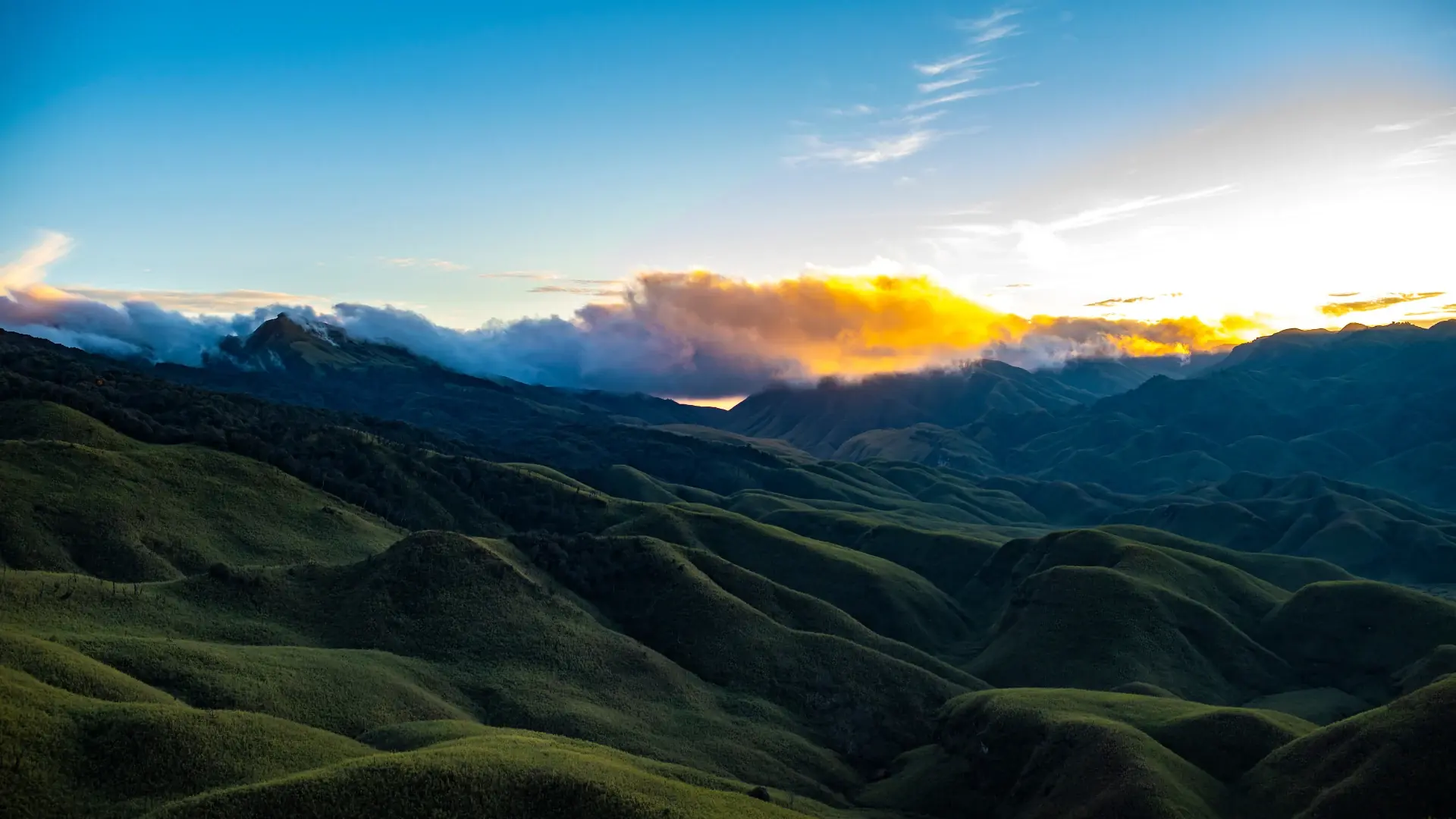
For most of us, Northeast India has always felt like that part of the country we keep saying, “I really need to go there someday.” It seems distant, a bit mysterious, and almost like a different India. But then there is Nagaland. A land of green hills, old stories, extraordinary food, colorful textiles, and some of the most distinct communities you will find anywhere in the country. And once a year, in December, the hills come alive with the Hornbill Festival.
When you visit Nagaland, you get to watch a culture shaped by many generations of tribes, each with its own language, traditions, food, clothing, music, and stories. The landscape is stunning, but what makes the trip remarkable is the conversations you will have, the new dishes you'll try, the local textiles you'll learn about, the villages you'll walk through, and the realization that so much of India is still waiting to be explored.
And then there is the Hornbill Festival in Kisama.
Held every December, the festival brings together communities from across Nagaland to celebrate music, dance, food, crafts, indigenous games, and Naga traditions. The Heritage Village becomes a meeting point for the state’s many cultural identities, and for a few days, music is everywhere, people are everywhere, and there's something new to discover around every corner.
It is colorful without trying to be.
Loud without being overwhelming.
And incredibly alive.
For women traveling to Nagaland for the Hornbill Festival, the experience becomes even more memorable when shared. You have someone beside you to try the unfamiliar food with, someone to laugh with when you inevitably get lost in the festival crowds, and a whole group of women to come back to after a long day of exploring.
But our trip isn’t just about the festival.
Our journey takes us through Kohima, where the hills hold stories from one of World War II's most important chapters. The Kohima War Cemetery, sitting above the town, is a moving reminder of the Battle of Kohima and the lives lost here.
Next is Khonoma, often called Nagaland’s green village.
Set among forested hills and terraced fields, Khonoma has a remarkable history of community-led conservation. It is a place where you can slow down, walk through the village, meet locals, and see a side of Nagaland that exists far beyond the festival stage.
We’ll also visit Touphema Heritage Village, where traditional Angami architecture, food, and village life offer another glimpse into the region’s culture.
The journey is hilly, the roads can be winding, and the places we stay are comfortable but simple.
Honestly, that’s part of the charm.
Nagaland isn’t a polished tourist spot. It feels real, a bit rough around the edges, sometimes unpredictable, and all the more memorable for it.
This women-only group trip to Nagaland is for those who want more than just beautiful views. It’s for women who want to connect with people, try new foods, hear new stories, and travel somewhere that still feels exciting and unfamiliar.
We’ve handled the planning so you don’t have to. From stays and internal transfers to guided experiences, everything, including the Hornbill Festival and the route through Nagaland, is thoughtfully planned so you can focus on being present for the journey.
Because sometimes the best trips are the ones where you arrive knowing very little.
And you leave wondering why you waited so long to visit.
If Nagaland and the Hornbill Festival have been on your Northeast India bucket list, then this is your sign.
Come for the festival.
Stay for the hills, the stories, and the people.
And leave with a whole new idea of what India can be.
Everything you might want to ask before you book this journey.
Yes, non-Nagaland residents require an Inner Line Permit (ILP) to enter the state. The good news is that ILP is now easy to obtain online through the Nagaland government portal, and TFL handles the coordination for all participants on this trip. The Hornbill Festival permit is also included in your trip cost — you don't need to arrange anything separately.
The Hornbill Festival is held annually in the first week of December at Kisama Heritage Village, about 12 km from Kohima. It brings together all of Nagaland's major tribes in one place — each with their own morung (tribal hut), traditional attire, music, food, and cultural performances. Named after the hornbill bird that features prominently in Naga folklore, it is one of the most immersive cultural festivals in India and has been growing in international recognition every year. Being there in a women-only group, with a Flapper coach who knows the ground, is a completely different experience from showing up on your own.
Early December in Nagaland is cool and crisp — temperatures in Kohima typically range between 5°C and 18°C. Days are clear and pleasant for being outdoors at the festival grounds, and evenings get cold. Pack warm layers, a good jacket for the nights, and comfortable walking shoes. It is a refreshing change from the heat most of India is still dealing with in November and December.
Yes, and we want to be upfront about this. Nagaland's infrastructure, especially around Kohima and Kisama during the festival period, is basic. You will be staying at Hotel Lavisto or a similar property — clean, hygienic, and comfortable, but not a five-star experience. If you are someone who needs luxury amenities to enjoy a trip, this one may not be the right fit. If you travel for the experience and can adapt easily, you will have an extraordinary time.
Nagaland is one of the safest states in India for travellers, including women. The Naga people are known for their hospitality and the region has a very low crime rate. During the Hornbill Festival period, there is also increased security and organisation around the festival grounds. With a Flapper coach accompanying the group throughout, you are never navigating anything alone.
Naga cuisine is unlike anything else in India — smoky, fermented, deeply flavoured, and built around local ingredients like bamboo shoot, raja mirchi (one of the world's hottest chillies), dried fish, and foraged greens. It is predominantly non-vegetarian. For vegetarians, options exist but are limited, so please flag your dietary requirements at the time of booking so we can plan accordingly. Trying the food at the Hornbill Festival stalls — where each tribe serves their own traditional dishes — is one of the highlights of the trip.
This is a moderately easy trip in terms of activity level. Most days involve walking through villages, festival grounds, and heritage sites — comfortable and accessible for most fitness levels. The roads in Nagaland are hilly and some stretches can be bumpy, so if you are prone to motion sickness, carry medication. No treks or strenuous activities are involved.
A minimum of 7 confirmed participants is required for this journey to operate. Please check flight timings to and from Dimapur with us before making any bookings, as we coordinate airport transfers around a group window.