Gujarat · Oct 09, 2026
Gir: where silence breaks into a roar
The only place on earth where the Asiatic lion still roams free. three days, three safaris, and a forest that will hold you captive long after you've left.
The only place on earth where the Asiatic lion still roams free. three days, three safaris, and a forest that will hold you captive long after you've left.
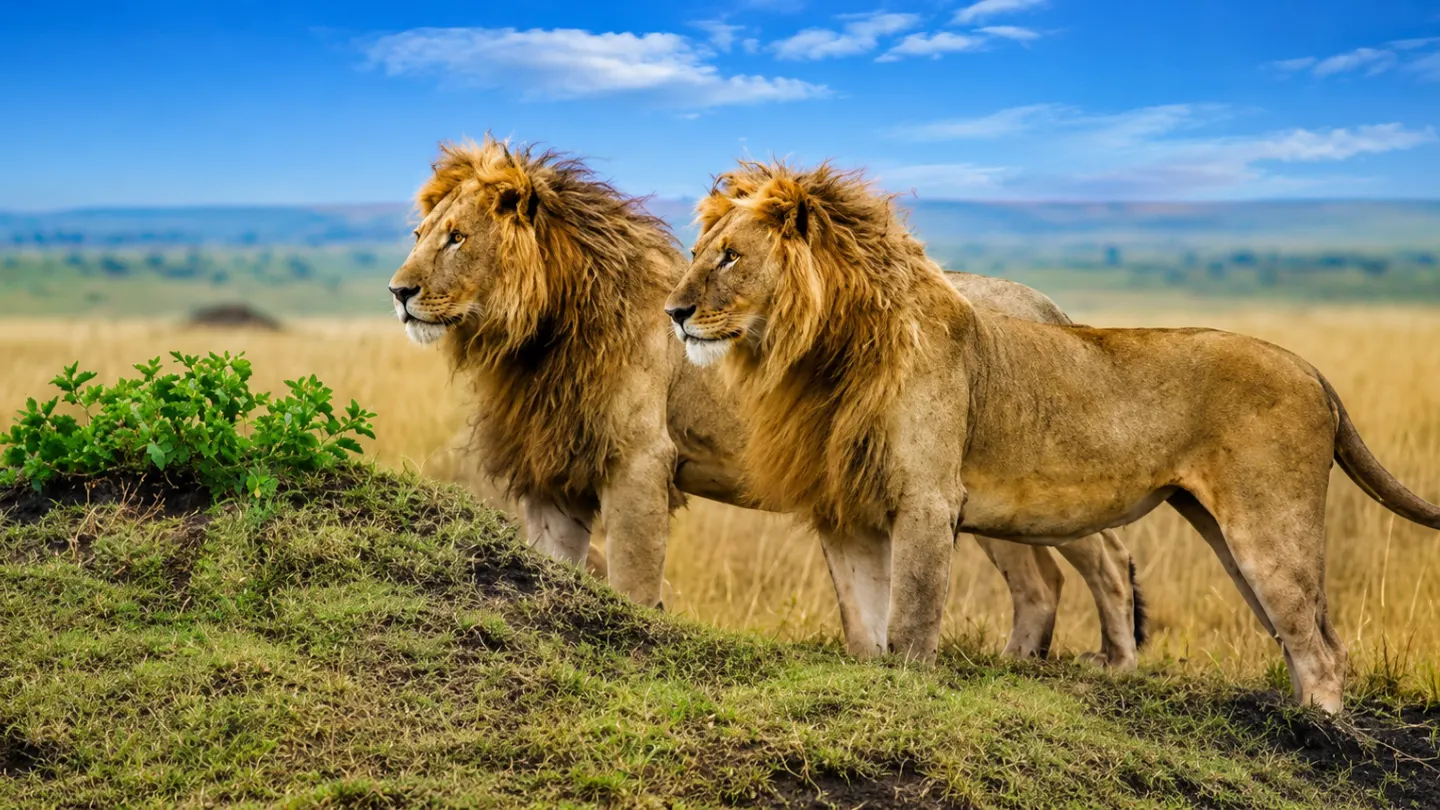
There is only one place in the world where you can look a wild Asiatic lion in the eye. That place is Gir.
Gir National Park in Gujarat is not just a wildlife sanctuary, it is the last stronghold of the Asiatic lion, and one of the most extraordinary conservation success stories on the planet. The forest stretches across golden grasslands, dry deciduous terrain, and dense teak and acacia cover, and every trail inside it feels like it belongs to the animals first. Because it does.
Women who have been on a Gir safari often describe the same thing: a particular kind of stillness that takes over the moment the jeep enters the forest. The city falls away completely. The air changes. And then a pugmark in the dust, a movement in the grass, and suddenly the king of the jungle is right there.
But Gir is not only about lions. Shy leopards melt in and out of the treeline. Chital graze in unhurried herds. Striped hyenas, jungle cats, blackbucks, and over 300 species of birds share this landscape. A Gir safari is a full sensory experience, the calls echoing through the trees at dusk, the quality of light in the early morning, the feeling of sitting in silence in the middle of a forest that has its own rhythm entirely.
Three safaris across two days means three different chances, three different zones, three different stories. No two safaris in Gir are ever the same and that unpredictability is exactly the point. You don't control what you see. You just show up, stay quiet, and let the forest decide.
This is a trip for women who want to feel small in the best possible way.
Everything you might want to ask before you book this journey.
Gir is one of the most well-managed national parks in India, with strict safari protocols, trained naturalists, and experienced guides accompanying every jeep. Travelling with a women-only group and a Flapper Coach means you always have someone managing the logistics, the zones, and any situation that comes up. The forest itself follows rules and so do we.
October is a great window to visit Gir. The post-monsoon landscape is lush, the temperatures are manageable, and the animals are active. The forest opens after the monsoon closure in mid-October, which means this trip catches Gir at its most alive — fresh, green, and full of movement.
Three safaris are included across the trip, each approximately 3.5 hours, with six Flappers per jeep. Safaris happen in the early morning and late afternoon, which are the best windows for wildlife activity. The safari zones are assigned by the forest department, and TFL keeps the schedule flexible to access the best zones available on the day.
The Asiatic lion is the headline, but Gir has far more to offer. Leopards, striped hyenas, jungle cats, blackbucks, chowsingha, sambar, chital, wild boar, langurs, and jackals all share the forest. Gir is also a birdwatcher's destination, with over 300 species including the crested serpent eagle, Indian roller, and paradise flycatcher. Wildlife sightings are never guaranteed but Gir has one of the highest lion sighting rates of any sanctuary in India.
Earthy, muted tones are essential, avoid bright colours and white. Carry a light layer for the early morning chill, a hat, sunscreen, and your camera. No flash photography is permitted inside the forest. Comfortable closed shoes are recommended. Your Flapper Coach will brief the group before each safari.
Absolutely. In fact, many women say their first safari experience is the most powerful one because you don't yet know what to expect, and the forest surprises you completely. No prior wildlife experience is needed. All you need is patience, curiosity, and a willingness to sit in silence and let the jungle come to you.