There is a part of India that most Indians have never been to and most international travellers have never heard of. Arunachal Pradesh sits at the far northeastern corner of the country, bordering China, Bhutan, and Myanmar, covering an area larger than many European countries and holding within it a staggering diversity of landscape, culture, and wildlife. It is a place where the Himalayas are still wild, where monasteries sit at altitudes that make breathing an effort, where rivers run green and cold through valleys that have barely changed in centuries, and where the warmth of the people you meet along the way stays with you long after the mountains have faded from view.
This trip is a proper road journey through the heart of western Arunachal, beginning in Guwahati and climbing steadily into the hills through Dirang, over the extraordinary Sela Pass, and up to Tawang before descending through Bomdila to the forests of Nameri. Every section of this route offers something completely different, and together they make one of the most varied and immersive itineraries available anywhere in northeast India.
Guwahati, the gateway to the Northeast, begins the trip with a visit to the Kamakhya Temple, one of the most powerful Shakti Peethas in India, perched on Nilachal Hill above the Brahmaputra with views of the great river stretching out below. It is a fitting beginning to a journey that will take you through landscapes of increasing drama and spiritual significance.
The drive into Arunachal through Bhalukpong and up to Dirang is where the transformation begins. The plains fall away, the hills close in, the air changes, and you enter a state that immediately feels different from anything else in India. Dirang sits in a valley of apple orchards and hot springs, its Kalachakra Monastery a place of great calm above the town. It is the first taste of the Tibetan Buddhist world that deepens as the trip moves north.
Sela Pass, at 13,700 feet, is one of the highest motorable passes in India and the gateway to Tawang. The drive over it passes Sela Lake, a glacial lake set among snow peaks of breathtaking beauty, and the Jaswantgarh War Memorial, dedicated to the soldiers of the 1962 Indo China War, a sober and moving stop in a landscape that carries the weight of that history clearly. The descent into Tawang on the other side is one of the most dramatic arrivals in Indian travel.
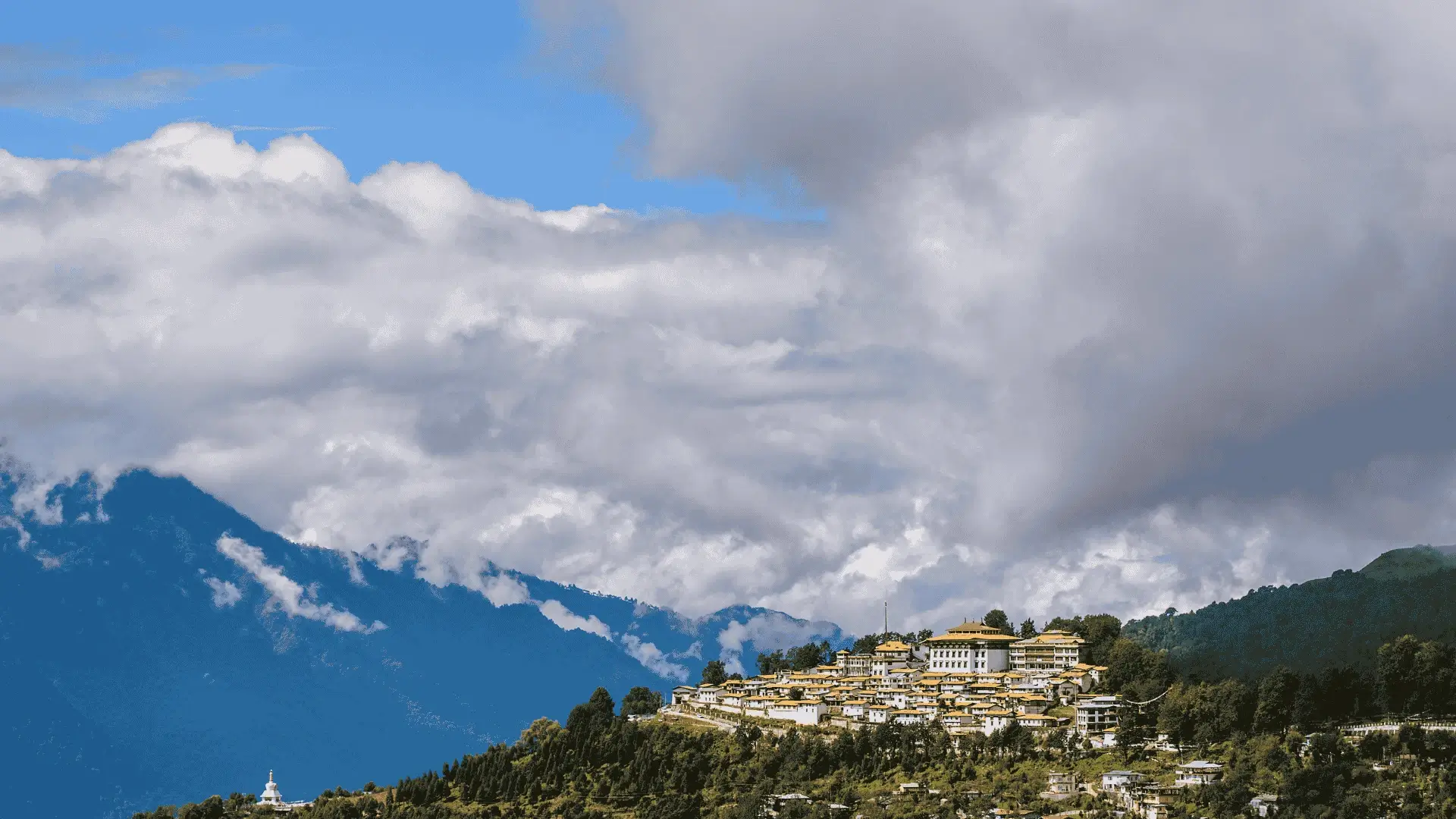
Tawang is the emotional centre of this trip. At 10,000 feet, surrounded by snow peaks and deep valleys, it is home to the Tawang Monastery, the largest monastery in India and the second largest in the world after Lhasa. Founded in the 17th century by Merak Lama Lodre Gyatso, it houses over 450 monks and an extraordinary collection of manuscripts, thangkas, and sacred objects. The nearby Urgelling Monastery, the birthplace of the 6th Dalai Lama, and the panoramic Buddha Statue viewpoint above the valley add to a day of exploration that is genuinely hard to leave.
Bumla Pass, at 15,200 feet on the actual border with China, is one of the most remote and extraordinary places accessible on this trip. The drive up from Tawang passes Madhuri Lake, a stunning glacial lake made famous by a Bollywood film but beautiful entirely on its own terms, and PTSO Lake, set in a landscape of austere, high altitude grandeur that feels genuinely otherworldly. Standing at Bumla, at the edge of India, with China visible on the other side, is a moment with a particular weight to it that is difficult to describe but easy to feel.
The descent back through Bomdila, with its monastery and mountain views, and down into the lush forest landscape around Nameri, brings the journey to its most restorative section. Nameri National Park is a river and forest reserve in Assam known for its extraordinary birdlife and the clean, cold Jia Bhoreli river that runs through it. A guided nature walk in the early morning here, with the sounds of the forest coming alive around you, is a quiet and perfect ending to a trip that has moved through some of the most dramatic terrain in the country.
Eight days, five valleys, one international border, countless mountains, and a version of India that most people never know exists.